





TRUSTED BY THE SMARTEST TEAMS IN THE WORLD FOR CERTIFIED CANDIDATES
SPOTO Blogs
Useful learning materials to become certified IT personnel
-
- 812
- SPOTO 2
- 2026-05-11 10:03
-
- 807
- SPOTO 2
- 2026-05-09 09:58
-
- 928
- SPOTO 2
- 2026-05-09 09:52
-

- 671
- SPOTO 2
- 2026-05-08 10:10
-
- 762
- SPOTO 2
- 2026-05-08 10:05
-
- 734
- SPOTO 2
- 2026-05-07 09:54
-
- 735
- SPOTO 2
- 2026-05-07 09:48
-
- 829
- SPOTO 2
- 2026-05-06 10:31
-
- 802
- SPOTO 2
- 2026-05-06 10:27
)

)
 Success (1))
 Success)
)
TRUSTED BY THE SMARTEST TEAMS IN THE WORLD FOR CERTIFIED CANDIDATES
SPOTO Blogs
Useful learning materials to become certified IT personnel
-
- 812
- SPOTO 2
- 2026-05-11 10:03
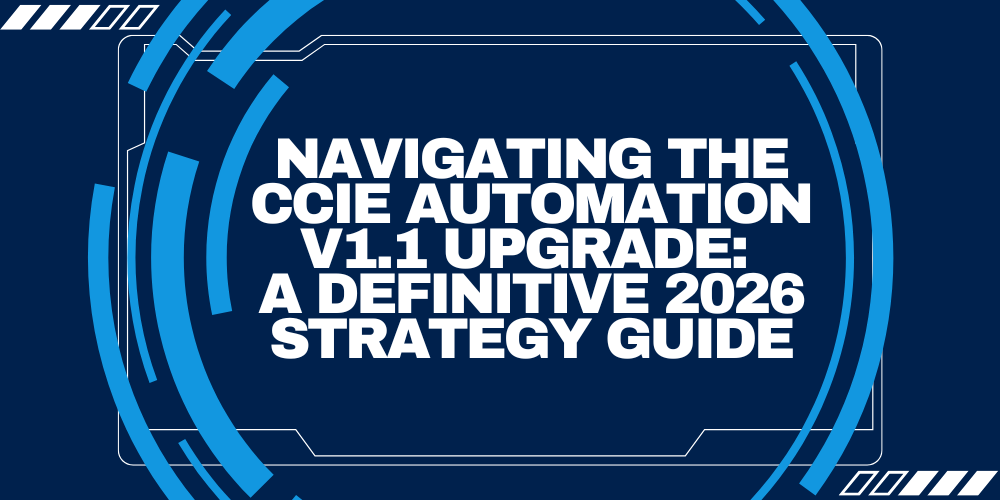
Table of Contents1. The Reimagined Exam Structure: A Shift in Core Competencies2. Modernizing the Technical Stack: 2026 Requirements3. The 16-Week Mastery Roadmap: A Strategic Timeline4. Elite Tactics for Lab Day Success5. Elevate Your Potential with SPOTO Effective February 3, 2026, Cisco officially rebranded the DevNet Expert certification as CCIE Automation v1.1. This transition is far more than a name change; it represents a tectonic shift in Cisco's certification philosophy. Automation has moved from a peripheral skill set to the very heart of enterprise network architecture. While the fundamental objectives remain recognizable, the version 1.1 assessment demands unprecedented proficiency in engineering delivery, multi-vendor integration, and the creation of highly resilient, automated solution designs. 1. The Reimagined Exam Structure: A Shift in Core Competencies The CCIE Automation v1.1 maintains the classic 8-hour format—consisting of a 3-hour design module and a 5-hour deploy, operate & optimize module—but the focus has pivoted toward cloud-native principles and hybrid-infrastructure ecosystems. The curriculum is built upon five equally weighted pillars: Software Design (20%): Mastering scalable architectural patterns, Git workflows, and software development lifecycles (SDLC). Automation Programming (20%): Moving beyond simple scripts to build production-grade, modular, and reusable codebases. Infrastructure as Code (20%): Leveraging declarative state management to ensure predictable and repeatable infrastructure deployments. Network Security Automation (20%): Implementing DevSecOps by integrating automated security audits, zero-trust policies, and encrypted API communications. Operations & Diagnostics (20%): Utilizing advanced telemetry and automated fault-remediation strategies in distributed environments. The strategic objective has matured from "basic scripting" to "Architectural Solution Orchestration." Candidates must now prove they can integrate disparate technologies into a singular, high-availability platform. 2. Modernizing the Technical Stack: 2026 Requirements Version 1.1 strictly mandates the transition from manual, CLI-heavy workflows to a controller-first methodology powered by modern infrastructure as code (IaC) toolsets. Critical Mastery Areas Hybrid Cloud Networking: Engineering secure connectivity between private data centers and public clouds (AWS/Azure) utilizing Terraform multi-cloud providers. Controller Orchestration: Achieving total fluency in Cisco DNA Center 2.3+, vManage 20.9+, and ACI 5.2+ APIs, focusing on webhook triggers and real-time state synchronization. CI/CD & DevOps Engineering: Building robust pipelines with Ansible 2.14+ (utilizing Collections and Roles) and pyATS for automated network state verification and regression testing. Observability & Telemetry: Harnessing the power of the Prometheus and Grafana stack to perform log aggregation and correlate telemetry data for proactive troubleshooting. Automated Security Compliance: Incorporating OWASP security standards, micro-segmentation via Cisco Secure Workload (Tetration), and dynamic API credential rotation. Obsolete Technologies to Abandon Legacy protocols and tools—including Puppet, Python 2.x, traditional IOS XE CLI-only automation, and SNMP-based telemetry—have been purged from the v1.1 blueprint. Focusing on these will result in wasted effort. Version Strictness To avoid technical hurdles during the lab, candidates must mirror official versions in their practice: Nexus OS 10.1, DNA Center 2.3, and SD-WAN 20. 9. Version incompatibility is a leading cause of failures in the practical module. 3. The 16-Week Mastery Roadmap: A Strategic Timeline Phase 1: Alignment & Infrastructure Logic (Weeks 1–3) The objective is to internalize the blueprint. Focus on deconstructing the "Design" requirements for hybrid clouds. Establish your local environment using Cisco Modeling Labs (CML) or DevNet Sandboxes to ensure your toolchain—including VS Code and Git—is fully functional. Phase 2: Functional Development & CRUD Mastery (Weeks 4–10) Deepen your programming expertise. Advance beyond "GET" requests to implement full CRUD (Create, Read, Update, Delete) operations across all Cisco controllers. Master idempotency with Ansible and state management with Terraform HCL, ensuring that your automation can handle API errors and timeouts without breaking. Phase 3: Full-Scale Exam Simulations (Weeks 11–14) Transition to 8-hour mock exams. Specifically, drill the design module to ensure you can produce comprehensive documentation, logic flowcharts, and architectural justifications within the 180-minute limit. This phase builds the mental stamina required for the real lab. Phase 4: Optimization & Specialized Troubleshooting (Weeks 15–16) The "Final Polish" stage. Construct a personal repository of troubleshooting steps for common automation pitfalls, such as API authentication failures, Terraform state locks, and Ansible YAML syntax errors. Refine your speed in locating specific parameters within official Cisco documentation. 4. Elite Tactics for Lab Day Success Think Like an Architect: The Design module is the foundation. High-scoring candidates provide well-documented, maintainable solutions rather than just "working" code. Clear documentation is a significant differentiator. API-Centric Delivery: In v1.1, the CLI is largely a legacy fallback. For maximum points, prioritize automated toolsets (REST, NETCONF, RESTCONF) for all configuration tasks. Standardized Diagnostic Workflow: When a script fails, don't guess. Follow a rigid process: Review Log Files → Analyze API Status Codes → Compare Desired vs. Actual State → Validate Data Plane. Documentation Speed Reading: You are allowed access to official documentation. Practice the "30-second search"—knowing exactly where to find JSON schema structures or Ansible module parameters without manual memorization. 5. Elevate Your Potential with SPOTO The path to CCIE Automation v1.1 is complex, but you don't have to navigate it alone. SPOTO offers a sophisticated, real-time update system that remains perfectly in sync with Cisco's 2026 requirements. We don't just provide practice labs; we provide the architectural logic required to lead the industry. At SPOTO, we empower you to move beyond the role of a "network scripter" to become a Master Automation Architect. Our customized study plans and expert-led white papers are designed to ensure you pass on your first attempt while gaining the skills to architect the next generation of enterprise networks. Take the first step toward the pinnacle of your career. Connect with a SPOTO study advisor today to access our premium CCIE Automation v1.1 resources! -
- 807
- SPOTO 2
- 2026-05-09 09:58
Table of Contents1. Navigating the v1.1 Curriculum Revolution2. The Version Compliance Mandate3. An Actionable 16-Week Mastery Timeline4. Key Performance Tactics for Success The introduction of the CCIE Enterprise Infrastructure (EI) v1.1 lab on February 1, 2026, signals a transformative era for Cisco's flagship certification. This is not a minor iteration; it is a profound technical pivot. By purging nearly a quarter of legacy "technical debt"—such as outdated routing protocols—Cisco has centered this exam on the software-defined, controller-orchestrated landscapes of modern business. While the 8-hour format remains, the path to victory has shifted from rapid-fire CLI typing to high-level architectural orchestration and API mastery. 1. Navigating the v1.1 Curriculum Revolution Modernizing the Foundation (30%) The "underlay" of the network has been streamlined. Candidates can step away from legacy features like VTP or BGP add-path to focus on robust campus resiliency. Resilient Design: Expertise in Multichassis EtherChannel (MEC) is now mandatory for creating stable, loop-free environments. Routing Logic: Success requires mastery over complex VRF-to-VRF leaking using Virtual Routing and Forwarding (VRF) Aware Software Infrastructure (VASI) and sophisticated route-map filtering. IPv6 Standards: With industry trends moving toward IPv6-only cores, full-scale OSPFv3 implementation has become a high-priority exam pillar. The Software-Defined Ecosystem (25%) This domain represents the intelligence of the modern network. The v1.1 update re-centers SD-Access and SD-WAN around lifecycle management rather than isolated configurations. SD-Access: Candidates must manage the full fabric lifecycle, from underlay/overlay initialization to automated provisioning. New focus areas include "Fabric in a Box" (FiaB) for optimized branch deployments and using DNA Center Assurance to transform telemetry data into actionable troubleshooting insights. SD-WAN: The exam now tests "cloud-edge" readiness. Expect to integrate fabrics with major cloud providers (AWS, Azure, GCP), requiring an intimate understanding of OMP path selection and centralized policy orchestration. The Shift to Programmatic Logic (20%) In the v1.1 era, the CLI has been relegated to a secondary role. Dynamic Templates: Candidates must demonstrate proficiency with Jinja2 templates and YAML data models to deploy configurations at scale. API Fluency: Direct interaction with vManage and DNA Center Northbound APIs is essential. You must use Python and Postman not just for deployment, but for health verification and automated fault remediation. 2. The Version Compliance Mandate Achieving technical accuracy requires your practice environment to mirror the exam’s specific software stack. Deviation is the primary cause of lab failure. The v1.1 standard is locked to: IOS XE: 17.9 SD-WAN: 20.9 DNA Center: 2.3 Practicing on older or newer versions can be fatal, as API endpoint changes or command syntax variations between releases will lead to invalid configurations during the actual test. 3. An Actionable 16-Week Mastery Timeline Weeks 1–3: Audit & Infrastructure Setup Begin with a rigorous audit of the v1.1 blueprint to pinpoint your weaknesses. Build your virtual lab using Cisco Modeling Labs (CML 2.0+) and leverage Cisco DevNet Sandboxes for hands-on controller access. Synchronize your development tools (VS Code, Python, Git) to the official exam versions immediately. Weeks 4–10: Integration & Advanced Engineering Move from static labs to integrated scenarios. Develop a Systematic Troubleshooting Protocol: analyze API return codes (2xx vs 4xx/5xx), parse system logs, and validate data-plane reachability. Maintain a "Mistake Journal" to document every configuration error and its corresponding fix. Weeks 11–14: High-Fidelity Mock Exams Engage in full 8-hour simulations to build endurance. Use the Design Module to practice creating professional-grade network diagrams and architectural justifications. In the Practical Module, sharpen your "muscle memory" for the DNA Center GUI and script execution under intense time constraints. Weeks 15–16: Specialized Polishing Dedicate these final days to your most difficult tasks. Whether it’s Terraform state management or complex Jinja2 loops, drill until the logic is second nature. Finalize your "Quick-Reference Manual" for core API endpoints and verification commands to minimize documentation searches during the exam. 4. Key Performance Tactics for Success Design is the gateway: The Design section accounts for 30% of your score. Treat your design output as a professional consultancy deliverable; logical IP planning and clear segmentation are critical. API-First Strategy: Whenever a task can be handled via the Controller GUI or an API, choose that route. Automated grading systems are designed to check the controller’s synchronized state, not just local CLI entries. Logical Diagnostics: Abandon "trial and error." Follow a strict diagnostic sequence: verify underlay reachability, check control-plane adjacency, examine API responses, and then confirm data-plane traffic. Documentation Speed-Reading: You will have access to Cisco documentation during the test. Do not try to memorize everything; instead, practice locating specific configuration parameters within the online library in 30 seconds or less. Summary: The CCIE Enterprise Infrastructure v1.1 is more than a test of technical skill—it is a validation of your ability to orchestrate complex digital systems. By transitioning from a protocol-focused technician to a policy-driven architect, you position yourself at the forefront of the SDN revolution. SPOTO is your partner in this evolution. We provide a synchronized, version-correct learning ecosystem that ensures your preparation is always aligned with the latest Cisco requirements. We move beyond rote learning to help you master the architectural logic that defines a true expert. Partner with SPOTO to secure your CCIE status and lead the future of enterprise networking. -
- 928
- SPOTO 2
- 2026-05-09 09:52
Table of Contents1. Evolution of the Technical Landscape in v3.12. Strategic Impact of the New Weightings3. A Structured 16-Week Mastery Roadmap4. The Architect's Toolkit5. Tactical Advice for Exam Day As of February 2026, Cisco has officially transitioned the CCIE Data Center track to version 3.1. This update reflects a significant industry movement toward deep-tier integration and software-driven networking. The examination retains its grueling 8-hour format, split into a 3-hour Design module and a 5-hour Deployment, Operation, and Optimization module. The modernized curriculum is built upon five foundational pillars: ACI, NX-OS, UCS, Storage, and Automation. Most notably, Automation now carries a 15% weight, marking a shift where programmatic proficiency is no longer an "extra" but a core requirement for elite candidates. 1. Evolution of the Technical Landscape in v3.1 The February 2026 blueprint recalibration prioritizes contemporary fabric technologies while retiring several legacy protocols. Network Fabric & Connectivity: Traditional Spanning Tree and older FCoE implementations have been phased out. The current exam spotlights OSPFv3 and BGP multi-instance within EVPN-VXLAN environments. Core Fabric Infrastructure: Cisco ACI 5.2+ is now the centerpiece of the exam. Candidates must master high-complexity scenarios such as Multi-Pod ACI, Inter-VRF leaking, and MP-BGP, effectively replacing outdated technologies like OTV. Compute & Storage Integration: UCS Manager 4.0+ has become the standard for orchestration, focusing heavily on service templates and native ACI integration. Storage has shifted toward FC/FCoE and IP-based storage (NFS/iSCSI) on the MDS 9000 platform. The Modern Automation Stack: Puppet and legacy scripts have been removed. Candidates must now prove fluency in Python 3.9, Ansible 2.14, and Terraform 1.5 for stateful infrastructure management. 2. Strategic Impact of the New Weightings With ACI-centric tasks now accounting for over 40% of the total score, architectural expertise is mandatory. The difficulty level has increased due to the focus on "cross-domain integration." In 2026, the era of manual CLI input is ending. Success depends on the ability to deploy infrastructure through code—for instance, utilizing a single Ansible playbook to simultaneously provision UCS compute nodes and apply corresponding ACI security contracts. 3. A Structured 16-Week Mastery Roadmap Phase 1: Blueprint Alignment (Weeks 1–3) Start by auditing the v3.1 blueprint to identify specific knowledge gaps. Focus on the core components of ACI (Tenants, Bridge Domains, and Contracts) and essential NX-OS features like vPC and BGP EVPN. Immediately establish a lab environment using the Cisco DevNet Sandbox for ACI 5.2 and local CML 2.0+ instances for automation development. Phase 2: Technical Deep-Dives (Weeks 4–10) This intensive phase requires a daily commitment. Spend 90 minutes each day on advanced ACI topics like micro-segmentation and multi-pod connectivity. Dedicate an additional hour to EVPN-VXLAN, specifically focusing on ARP suppression and data plane forwarding. In the Automation realm, move beyond simple API queries to implement full CRUD operations using REST APIs and Terraform HCL. Phase 3: Exam Simulations (Weeks 11–16) Conduct weekly 8-hour mock exams. Use the 3-hour Design module to practice professional documentation and architectural planning. During the 5-hour practical phase, focus on execution speed and verification. Build a "Fast-Check Manual"—a personalized reference of ACI verification commands and Python snippets to accelerate your lab performance. 4. The Architect's Toolkit Primary Documentation: The Cisco DevNet Documentation Center is the essential resource for API references. Lab Simulation: Cisco Modeling Labs (CML) remains the gold standard for testing complex topologies locally. Specific Software Versions: Ensure your practice gear runs NX-OS 10.1, ACI APIC 5.2, and UCS Manager 4.0. Developer Suite: Proficiency in VS Code, Postman, and Git is required to manage modern automation workflows effectively. 5. Tactical Advice for Exam Day Avoid the Version Trap: You must match the exam's software versions exactly during your practice. Even minor version discrepancies can lead to syntax errors or missing features in the live lab. Master the Fabric Interface: ACI is the gatekeeper of this exam. You must be able to manage fabric discovery and policy orchestration fluently, without constant reliance on help files. Leverage the Automation Edge: Use Python and Ansible to handle repetitive configurations. This strategy creates a significant time buffer for the complex troubleshooting tasks encountered in the final hours. Root Cause Proficiency: Practice by "breaking" your own configurations. Intentionally misconfigure ACI contracts or EVPN peerings to learn how to identify root causes through telemetry data and log analysis under high pressure. Summary: The transition to CCIE Data Center v3.1 signals the rise of the "architectural integrator." To succeed in 2026, you must demonstrate the ability to weave compute, storage, and network fabric into a unified system through automation. SPOTO is your partner in this evolution. We provide a synchronized, version-correct learning ecosystem that ensures your preparation is always aligned with the latest Cisco requirements. We move beyond rote learning to help you master the architectural logic that defines a true expert. Partner with SPOTO to secure your CCIE status and lead the future of enterprise networking. -
- 671
- SPOTO 2
- 2026-05-08 10:10
Table of Contents1. Technological Evolution in the v3.1 Blueprint2. The Strategic Impact of Weighted Changes3. A 16-Week Disciplined Preparation Strategy4. The Candidate's Resource Toolkit5. Professional Tactics for Lab Success The CCIE Data Center certification underwent a significant evolution in February 2026 with the release of version 3.1. This update aligns the credential with the contemporary shift toward unified, programmatically managed data center ecosystems. The examination remains a rigorous 8-hour challenge, divided into a 3-hour Design section and a 5-hour Deployment, Operation, and Optimization phase. The v3.1 framework rests on five essential pillars: ACI, NX-OS, UCS, Storage, and Automation. Most notably, the weight of Automation has been elevated to 15%, establishing it as the decisive factor for candidates aiming for expert status. This guide breaks down the technical pivots and provides a strategic timeline for candidates to navigate this high-stakes landscape. 1. Technological Evolution in the v3.1 Blueprint As of February 26, 2026, Cisco has refined the curriculum to emphasize modern fabrics while shedding legacy technical debt. Networking & Connectivity: Older protocols like standard Spanning Tree and early FCoE iterations have been removed. The exam now centers on OSPFv3 and BGP Multi-instance within EVPN-VXLAN architectures. Fabric Management: Cisco ACI 5.2+ is now the unquestioned centerpiece. Candidates must master advanced scenarios, including Multi-Pod setups, Inter-VRF routing, and MP-BGP, effectively replacing outdated methods like OTV. Computing & Storage Convergence: UCS Manager 4.0+ serves as the new standard for server orchestration, stressing the importance of service templates. For storage, the focus has narrowed to FC/FCoE and IP-based solutions (NFS/iSCSI) on the MDS 9000 platform. The Modern Automation Stack: Legacy tools like Puppet have been deprecated. Mastery of Python 3.9, Ansible 2.14, and Terraform 1.5 is now mandatory for managing stateful infrastructure. 2. The Strategic Impact of Weighted Changes With ACI-related objectives now accounting for over 40% of the total score, deep architectural understanding is essential. The difficulty has increased because the exam now demands "cross-domain integration." To succeed, candidates must transition from manual CLI interactions to a "code-first" delivery model. For instance, an elite candidate is expected to use a single Ansible playbook to simultaneously orchestrate UCS hardware resources and implement granular ACI security policies. 3. A 16-Week Disciplined Preparation Strategy Phase 1: Foundation & Infrastructure Setup (Weeks 1–3) Begin by auditing the v3.1 blueprint to pinpoint specific knowledge gaps. Focus on the core components of ACI—such as tenants, bridge domains, and contracts—alongside vital NX-OS features like vPC. Immediately synchronize your lab environment by utilizing the Cisco DevNet Sandbox for ACI 5.2 and configuring a local CML 2.0+ instance for automation development. Phase 2: Advanced Technical Drills (Weeks 4–10) This is the phase of deep technical immersion. Devote 90 minutes daily to complex ACI topics like micro-segmentation and multi-pod connectivity. Spend an additional hour on EVPN-VXLAN specifics, such as ARP suppression. In the automation domain, move beyond basic connectivity scripts to perform full CRUD operations via REST APIs and manage infrastructure using Terraform HCL. Phase 3: Comprehensive Exam Simulations (Weeks 11–16) Shift to a weekly cadence of full 8-hour mock exams. Use the 3-hour design module to practice professional architectural justifications and logical planning. In the 5-hour lab, prioritize speed and execution accuracy. Develop a "Personal Logic Library"—a collection of verified ACI commands and reusable Python modules—to streamline your deployment speed. 4. The Candidate's Resource Toolkit Primary Documentation: Use the Cisco DevNet Documentation Center as your primary reference for API structures. Testing Platforms: Cisco Modeling Labs (CML) remains the top choice for simulating complex network topologies. Software Baseline: Practice exclusively with NX-OS 10.1, ACI APIC 5.2, and UCS Manager 4.0 to ensure feature parity with the exam. Development Suite: Proficiency in VS Code, Postman, and Git is required to manage a modern automation workflow efficiently. 5. Professional Tactics for Lab Success The Version Mandate: Ensure your study environment mirrors the exam versions perfectly. Even minor version discrepancies can lead to syntax failures or missing API endpoints. Fabric Fluency: ACI acts as the gatekeeper of the lab. You must be capable of resolving fabric discovery issues and policy conflicts without relying on documentation for basic tasks. Automation as a Time-Saver: Use Python and Ansible to handle repetitive configurations. This creates a time buffer, allowing you more room to troubleshoot complex issues in the final hours of the exam. Intentional Failure Practice: Learn through "chaos engineering." Purposely misconfigure ACI contracts or EVPN peerings in your lab to practice identifying root causes via telemetry and log correlation under pressure. Summary: The launch of CCIE Data Center v3.1 signals the end of the traditional "configurator" and the rise of the "architectural integrator." Success in 2026 requires the seamless blending of compute, storage, and networking through the lens of programmatically managed systems. SPOTO serves as your strategic ally in this transformation. We provide a real-time, version-locked learning ecosystem that ensures your preparation is always in sync with Cisco's latest requirements. We move beyond rote memorization to help you deconstruct the logic of the enterprise fabric. Partner with SPOTO to transform from a configuration technician into a genuine network architect, ready to command the future of enterprise infrastructure. -
- 762
- SPOTO 2
- 2026-05-08 10:05
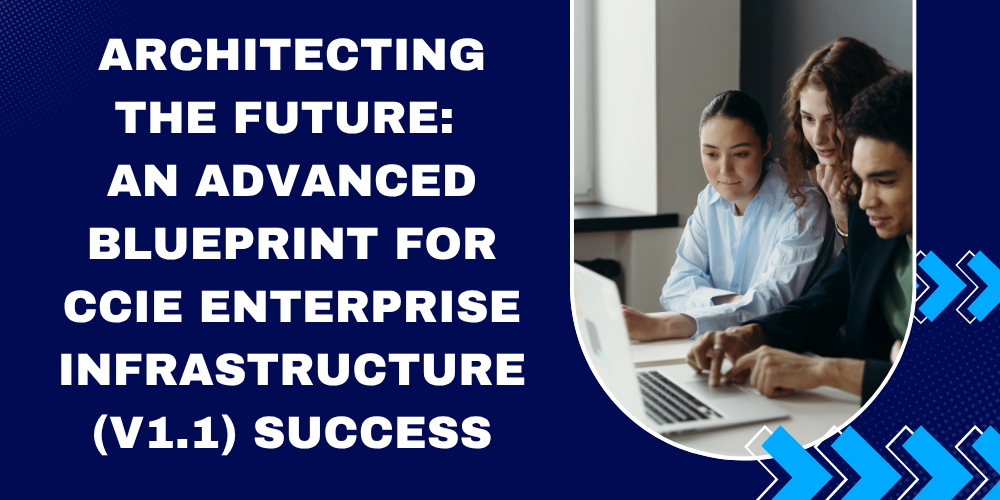
Table of Contents1. Deconstructing the v1.1 Curriculum Pivot2. Infrastructure Integrity: The Version Mandate3. The 16-Week Architectural Roadmap4. Strategic Performance Tactics The transition to the CCIE Enterprise Infrastructure (EI) Lab v1.1, effective February 1, 2026, represents a fundamental shift in how Cisco validates expert-level talent. This revision isn't a mere update; it is a structural redesign. By shedding roughly 20% of legacy routing protocols and "technical debt," Cisco has realigned the certification to mirror the software-centric, controller-led environments of modern global enterprises. The 8-hour examination remains a grueling marathon, but the finish line is no longer defined by CLI speed—it is defined by architectural orchestration, API fluency, and programmatic logic. 1. Deconstructing the v1.1 Curriculum Pivot Evolution of Network Infrastructure (30%) The "plumbing" of the network has been modernized. Candidates are no longer expected to spend time on VTP domain troubleshooting or legacy BGP features like add-path. Instead, the focus has shifted toward high-resiliency campus designs. High Availability: Mastery of Multichassis EtherChannel (MEC) is now critical for redundant, loop-free topologies. Routing Complexity: Preparation must include advanced VRF-to-VRF route leaking through Virtual Routing and Forwarding (VRF) Aware Software Infrastructure (VASI) and complex route-map manipulations. IPv6 Readiness: Full-stack OSPFv3 deployment is prioritized, reflecting the industry-wide mandate for IPv6-native enterprise cores. The Software-Defined Core (25%) This domain constitutes the cognitive center of the exam. The SD-Access and SD-WAN sections have been overhauled to prioritize end-to-end lifecycle management over simple feature configuration. SD-Access: You must command the entire workflow—from underlay/overlay initialization to Fabric provisioning. New challenges include deploying "Fabric in a Box" (FiaB) for lean branch sites and leveraging DNA Center 360-degree Assurance to correlate telemetry data for rapid root-cause analysis of endpoint issues. SD-WAN: The curriculum now demands cloud-edge competence. You will be tested on integrating fabrics with AWS, Azure, and GCP, requiring a deep understanding of Overlay Management Protocol (OMP) path selection, centralized data policies, and localized control-plane enforcement. The Rise of Programmatic Orchestration (20%) In v1.1, the Command Line Interface (CLI) is no longer the primary tool—it is a backup. Template-Driven Configs: Success hinges on your ability to utilize Jinja2 templates and YAML data structures to generate configurations dynamically. API Proficiency: You must be fluent in interacting with vManage and DNA Center Northbound APIs. This includes using Python and Postman not just to configure devices, but to verify operational states and automate the remediation of fabric faults. 2. Infrastructure Integrity: The Version Mandate Precision in your lab environment is non-negotiable. The v1.1 exam is strictly benchmarked against: IOS XE: 17.9 SD-WAN: 20.9 DNA Center: 2.3 Practicing on mismatched versions is a recipe for disaster. Minor syntax changes or API endpoint variations between releases can result in failed script executions or missing GUI options, leading to critical point loss in the live environment. 3. The 16-Week Architectural Roadmap Weeks 1–3: Blueprint Analysis & Environment Sync The journey begins with a forensic audit of the v1.1 blueprint. Identify your knowledge gaps immediately. Establish your lab using Cisco Modeling Labs (CML 2.0+) and leverage the Cisco DevNet Sandbox for high-latency testing of DNA Center and SD-WAN controllers. Ensure your toolchain (VS Code, Python, Git) is synchronized with the exam's software versions. Weeks 4–10: The Engineering & Integration Phase Transition from theoretical study to modular implementation. Move beyond simple "Day 0" setups. This phase is about developing a Structured Troubleshooting Framework. Train yourself to analyze system logs, interpret API return codes (e.g., 200 OK vs. 409 Conflict), and perform post-config validation. Your goal is to build a "Failure Library"—a documented record of every configuration error you make and how to resolve it. Weeks 11–14: High-Pressure Mock Lab Execution Simulate the 8-hour ordeal with absolute fidelity. Dedicate full blocks to the Design Module, where you must justify architectural choices with professional diagrams and logical IP schemes. In the Deploy/Operate Module, focus on time management. Use these weeks to build the "muscle memory" required to navigate the DNA Center GUI and write Python scripts under intense time constraints. Weeks 15–16: Optimization & Technical Refinement The final sprint is reserved for surgical focus on weak points. If Terraform providers or Jinja2 loop logic are slowing you down, drill these specific tasks. Finalize your "Quick Reference" sheet for API endpoints and standardized CLI verification commands to ensure no time is wasted searching for documentation during the exam. 4. Strategic Performance Tactics Design as a Foundation: The Design module accounts for 30% of the total score and sets the stage for the practical lab. Treat your design documents as professional deliverables; clarity in network segmentation and policy planning is vital. API-First Execution: If a task can be completed via an API or the Controller GUI, do it there. Automated grading scripts often look for the state synchronized via the controller rather than locally injected CLI snippets. Methodical Troubleshooting: Avoid "shotgun" troubleshooting. Follow a rigid diagnostic path: verify the underlay, check controller adjacency, inspect the API response, and finally, validate the data plane. Strategic Documentation Usage: You will have access to the Cisco product documentation. Do not try to memorize every obscure command. Instead, master the ability to navigate the online library to find specific parameters within 30 seconds. Summary: The CCIE Enterprise Infrastructure v1.1 is the ultimate validation of the "Network Architect" persona. It proves you can not only route packets but also orchestrate entire digital ecosystems through code and policy. By moving away from a protocol-only mindset toward an architectural integration strategy, you evolve into a leader in the SDN era. SPOTO serves as your strategic ally in this transformation. We provide a real-time, version-locked learning ecosystem that ensures your preparation is always in sync with Cisco's latest requirements. We move beyond rote memorization to help you deconstruct the logic of the enterprise fabric. Partner with SPOTO to transform from a configuration technician into a genuine network architect, ready to command the future of enterprise infrastructure. -
- 734
- SPOTO 2
- 2026-05-07 09:54
Table of Contents1. Technological Shifts in the v3.1 Curriculum2. Strategic Impact of Weighting Changes3. A Disciplined 12–16 Week Preparation Roadmap4. The Expert's Toolkit5. Tactical Advice for the Lab As of February 2026, the CCIE Data Center Lab has evolved into version 3.1, reflecting the industry's pivot toward highly integrated and automated environments. The 8-hour exam maintains its rigorous two-part structure: a 3-hour Design module and a 5-hour Deployment, Operation, and Optimization module. The updated curriculum is anchored by five fundamental pillars: ACI, NX-OS, UCS, Storage, and Automation. Most notably, Automation now commands a 15% weighting, serving as the ultimate litmus test for elite-level candidates. This guide outlines the essential changes and a structured path to achieving certification in this modernized landscape. 1. Technological Shifts in the v3.1 Curriculum Effective February 26, 2026, the blueprint was recalibrated to prioritize modern fabric technologies over legacy protocols. L2/L3 Connectivity & Fabric: Traditional Spanning Tree and older FCoE variants have been deprecated. The exam now spotlights OSPFv3 and BGP Multi-instance within EVPN-VXLAN fabrics. Fabric Infrastructure: Cisco ACI version 5.2+ has solidified its role as the exam's core. The requirements have shifted toward complex scenarios involving Multi-Pod ACI, Inter-VRF communication, and MP-BGP, effectively replacing older technologies like OTV. Compute & Storage: UCS Manager 4.0+ is the new baseline for server orchestration, with a heavy emphasis on service templates and seamless ACI integration. Storage has converged toward FC/FCoE and IP-based storage (NFS/iSCSI) on the MDS 9000 platform. Automation Stack: Legacy Puppet scripting is out. The new standard requires proficiency in Python 3.9, Ansible 2.14, and Terraform 1.5 for stateful infrastructure management. 2. Strategic Impact of Weighting Changes With ACI-related tasks now comprising over 40% of the total exam score, architectural depth is no longer optional. The difficulty curve in 2026 has steepened due to the requirement for "cross-technology integration." Elite candidates are expected to move away from manual CLI configurations. Success now depends on the ability to deliver infrastructure through code—for instance, using a unified Ansible playbook to simultaneously provision UCS compute resources and enforce ACI security policies. 3. A Disciplined 12–16 Week Preparation Roadmap Phase 1: Alignment & Foundations (Weeks 1–3) Deconstruct the v3.1 blueprint to identify skill gaps. Focus on the building blocks of ACI (tenants, bridge domains, and contracts) and core NX-OS features like vPC and BGP EVPN. Establish your lab environment immediately; use the Cisco DevNet Sandbox for ACI 5.2 access and set up a local CML 2.0+ instance for automation testing. Phase 2: Domain Deep-Dives (Weeks 4–10) This is the intensive technical phase. Spend 90 minutes daily on advanced ACI topics such as micro-segmentation and multi-pod interconnectivity. Dedicate an additional hour to EVPN-VXLAN, specifically ARP suppression and traffic forwarding. In Automation, move beyond basic "GET" requests; practice full CRUD operations via REST APIs and manage infrastructure state using Terraform HCL. Phase 3: High-Pressure Simulation (Weeks 11–16) Execute full 8-hour mock exams weekly. Use the 3-hour Design module to master professional documentation and logical planning. During the 5-hour practical module, focus on speed and accuracy. Develop a "Fast-Check Manual"—a personal repository of ACI verification commands and reusable Python snippets to accelerate your deployment. 4. The Expert's Toolkit Official Documentation: The Cisco DevNet Documentation Center is the gold standard for API references. Simulation Tools: Cisco Modeling Labs (CML) remains the preferred platform for local topology testing. Software Versions: Practice exclusively on NX-OS 10.1, ACI APIC 5.2, and UCS Manager 4.0. Automation Suite: Proficiency in VS Code, Postman, and Git is essential for managing the automation workflow. 5. Tactical Advice for the Lab The Version Trap: Ensure your practice environment matches the exam's software versions exactly. Version mismatches are the leading cause of syntax errors and failed configurations. Master the Fabric: ACI is the gatekeeper. You must be able to troubleshoot fabric discovery and policy enforcement without constant reference to manuals. The Automation Edge: Use Python and Ansible to automate repetitive tasks. This grants you a significant time buffer to handle complex troubleshooting in the final hours of the lab. Root Cause Analysis: Practice by "breaking" your lab. Disable EVPN peerings or misconfigure ACI contracts to learn how to identify root causes through telemetry and log analysis under high pressure. Summary: The transition to CCIE Data Center v3.1 marks the end of the "configuration-centric" era and the dawn of the "Architectural Integrator." To succeed in 2026, you must seamlessly weave together compute, storage, and fabric through the lens of modern automation. By following this structured roadmap and focusing on the synergy between ACI and EVPN-VXLAN, you will be prepared to earn the industry's most prestigious data center credential. -
- 735
- SPOTO 2
- 2026-05-07 09:48
Table of Contents1. The v1.1 Curricular Evolution2. Essential Software Version Alignment3. The 16-Week Implementation Roadmap4. Advanced Lab Tactics The introduction of the CCIE Enterprise Infrastructure (EI) v1.1 Lab on February 1, 2026, signals a definitive transition in the networking industry. This revision represents a purposeful recalibration of the expert-level certification, stripping away roughly 20% of legacy routing protocols to clear a path for Software-Defined Networking (SDN) and code-driven operations. While the 8-hour format remains the gold standard of testing, the content has shifted to mirror the software-managed ecosystems of today's leading organizations. 1. The v1.1 Curricular Evolution Modernized Core Infrastructure (30%) Cisco has significantly streamlined the "traditional" portions of the blueprint. Outdated concepts like VTP and OSPFv2 LFA have been removed. In their place, the exam emphasizes high-resiliency designs featuring Multichassis EtherChannel (MEC), complex VRF-to-VRF routing via VASI interfaces, and a complete transition to OSPFv3 to facilitate the industry's move toward IPv6-centric architectures. The Rise of Software-Defined Architectures (25%) This section is the cornerstone of the v1.1 update, focusing on production-ready SDN deployments. SD-Access: Candidates must master the entire lifecycle of the fabric, from Underlay/Overlay engineering to segmentation and "Fabric in a Box" branch solutions. A major focus is placed on 360-degree Assurance, requiring you to use telemetry to diagnose and fix connectivity or performance issues. SD-WAN: The curriculum now integrates cloud-native connectivity (AWS, Azure, and GCP). You must demonstrate expert-level control over the Overlay Management Protocol (OMP) and differentiate between global orchestration and edge-specific policy enforcement. The Automation Mandate (20%) The days of manual CLI configuration are fading. Success in this track is tied to your ability to utilize Jinja2 templates and YAML data models for configuration deployment. Competency with DNA Center and vManage APIs is vital, as the lab expects you to leverage Python and Postman for management, monitoring, and proactive troubleshooting. 2. Essential Software Version Alignment Technical accuracy in the lab depends entirely on your training environment. To avoid the frustration of incompatible commands or missing features, your practice lab must match the exam's production environment exactly: Cisco IOS XE: 17.9 Cisco SD-WAN: 20.9 Cisco DNA Center: 2.3 3. The 16-Week Implementation Roadmap Phase 1: The Blueprint Deep-Dive (Weeks 1–3) Your journey begins with a comprehensive audit of the new exam requirements. Utilize the Cisco DevNet Sandbox and CML 2.0+ to familiarize yourself with the interfaces of DNA Center and SD-WAN. Use this time to bridge the gap between traditional routing knowledge and controller-based logic. Phase 2: Technical Proficiency & Skill Building (Weeks 4–10) Move from theory to hands-on implementation. During this phase, you should standardize your diagnostic approach. Develop a repeatable workflow that starts with log analysis and API return codes before moving to data-plane verification. This documentation will become your customized "troubleshooting bible." Phase 3: The Simulation Sprint (Weeks 11–14) Replicate the intensity of the testing center by engaging in full 8-hour mock exams. This phase is less about individual tasks and more about time management and design integrity. Ensure your documentation for the Design module is professional and logically sound, as it carries immense weight in the final grading. Phase 4: Final Refinement (Weeks 15–16) Use the final fortnight to shore up specific technical weaknesses. Whether it is perfecting your Terraform modules or streamlining your API call sequences, focus on high-speed execution. Polish your "cheat sheets" of essential API endpoints and core CLI verification commands. 4. Advanced Lab Tactics Design-First Thinking: The Design module represents 30% of your score. Treat your documentation with the same importance as your configuration; clear schemas and precise technical justifications are mandatory. Adopt an API-First Strategy: If an objective can be accomplished via an API, choose that over the CLI. Modern scoring often prioritizes your ability to use automated tools over manual syntax. Methodical Troubleshooting: Avoid "panic-clicking." Stick to a rigid diagnostic methodology to ensure you remain composed when fabric policies or endpoint registrations do not go as planned. Navigating Documentation: Since you have access to the Cisco library during the exam, don't waste time memorizing every flag. Instead, train yourself to find the exact configuration guide you need within 30 seconds. Summary: Earning your CCIE EI v1.1 is proof that you have evolved from a network technician into a Software-Defined Architect. This certification validates your ability to orchestrate, rather than just configure, modern enterprise systems. SPOTO serves as your strategic ally in this transformation. We provide synchronized, real-time study materials that reflect the latest Cisco blueprint changes. By removing the need for rote memorization and focusing on the underlying logic of SDN and automation, SPOTO prepares you to lead. Join the ranks of the elite architects who aren't just reacting to the industry's changes—they are driving them. -
- 829
- SPOTO 2
- 2026-05-06 10:31
Table of Contents1. The Modern Exam Paradigm: A Shift in Capability2. Technical Stack Evolution: Modern Tools for Modern Networks3. A Strategic 16-Week Mastery Roadmap4. Tactics for Maximizing Scores5. Partnering with SPOTO for Your CCIE Journey As of February 3, 2026, the Cisco DevNet Expert has been officially integrated into the premier certification tier as CCIE Automation v1.1. This transition signifies a profound shift in Cisco's philosophy, moving automation from a specialized niche to a foundational element of enterprise architecture. While the foundational blueprint is familiar, the new assessment criteria demand a higher level of proficiency in engineering delivery, cross-platform synergy, and comprehensive solution design. 1. The Modern Exam Paradigm: A Shift in Capability The v1.1 examination maintains the traditional 8-hour rigorous format, split into a 3-hour Design module and a 5-hour Deploy & Operate module. However, the thematic focus has pivoted sharply toward cloud-native architectures and hybrid-production ecosystems. The curriculum is built upon five pillars with equal weighting: Software Design (20%): Mastering architectural patterns and lifecycle management. Automation Programming (20%): Moving beyond basic scripts to robust, scalable code. Infrastructure as Code (20%): Utilizing declarative tools for predictable deployments. Network Security Automation (20%): Integrating security-as-code and zero-trust principles. Operations & Troubleshooting (20%): Advanced diagnostics in automated environments. The strategic goal has transitioned from simple "scripting" to "architectural solution delivery. " Candidates are now expected to demonstrate how disparate systems integrate into a high-availability, unified platform. 2. Technical Stack Evolution: Modern Tools for Modern Networks The v1.1 update mandates the abandonment of legacy manual workflows in favor of a stack centered on modern controllers and industry-standard Infrastructure as Code (IaC) utilities. Essential Performance Areas Hybrid Cloud Interconnects: Mastering the bridge between AWS/Azure and on-premises data centers using Terraform's multi-cloud capabilities. Advanced Controller APIs: Full fluency in DNA Center 2.3+, vManage 20.9+, and ACI 5.2+, focusing on event-driven automation and batch synchronization. DevOps Pipelines: Implementing reusable Ansible roles, remote Terraform state management (using S3 or Consul), and regression testing via pyATS. Observability & Monitoring: Leveraging Prometheus and Grafana to perform log aggregation and telemetry-based correlation. Security Integration: Incorporating OWASP standards, tetration-based micro-segmentation, and dynamic API token encryption. What to Deprioritize Legacy technologies such as Puppet, Python 2.x, traditional IOS XE CLI automation, and outdated telemetry protocols have been fully deprecated. Version Compliance Candidates must ensure their lab environments strictly align with Nexus OS 10.1, DNA Center 2.3, and SD-WAN 20.9. Incompatibility in software versions is the most common reason for failure in the practical lab exercises. 3. A Strategic 16-Week Mastery Roadmap Phase 1: Blueprint Alignment & Environment Setup (Weeks 1–3) Objective: Deconstruct the v1.1 curriculum and stabilize your development ecosystem. Week 1: Blueprint Analysis & Hybrid Cloud Concepts. Map every sub-bullet of the CCIE Automation v1.1 blueprint. Study the architectural theory of hybrid cloud (AWS/Azure) and how they interface with on-premises SD-WAN and ACI fabrics. Focus on the Design mindset—understanding why specific protocols are chosen over others. Week 2: Environment Provisioning. Set up your local Cisco Modeling Labs (CML) or access the Cisco DevNet Sandbox. Ensure your software versions are exact: DNA Center 2.3, SD-WAN 20.9, and Nexus OS 10.1. Configure your IDE (VS Code) with the necessary Python, YAML, and Jinja2 extensions. Week 3: Toolchain Fundamentals. Verify connectivity to all API endpoints using Postman. Familiarize yourself with the Git workflow (branching, merging, and pull requests) as this is the "Source of Truth" for your lab configurations. Phase 2: Core Development & Tool Proficiency (Weeks 4–10) Objective: Build high-performance, idempotent automation modules for the five core pillars. Week 4: Advanced Python for Network APIs. Master the requests and aiohttp libraries. Move beyond simple GET calls to implement complex POST/PUT/DELETE operations. Focus on Error Handling: writing code that gracefully manages 4xx and 5xx API return codes. Week 5: Infrastructure as Code (Terraform). Learn HashiCorp Configuration Language (HCL). Practice managing stateful resources on Cisco ACI and AWS. Implement Remote State Management using S3 buckets to simulate a collaborative production environment. Week 6: Configuration Management (Ansible). Build modular Ansible Roles. Focus on Idempotency—ensuring that running a playbook multiple times results in the same state without errors. Practice using Ansible for batch upgrades and policy changes on NX-OS. Week 7: SD-WAN & DNA Center Orchestration. Deep dive into vManage and DNA Center APIs. Practice event-driven automation: for example, automatically updating an SD-WAN security policy when a specific telemetry threshold is met. Week 8: Security & Compliance Automation. Integrate OWASP security checks into your scripts. Practice dynamic API token encryption and implementing micro-segmentation via Tetration/Secure Workload APIs. Week 9: Full-Stack Observability. Configure telemetry streaming. Use Python to parse gRPC/NETCONF data and feed it into Prometheus. Create Grafana dashboards that correlate network traffic with application performance. Week 10: CI/CD Pipelines & pyATS. Build a basic Jenkins or GitLab CI pipeline. Use pyATS/Genie to perform "Golden Config" comparisons and automated regression testing before and after configuration changes. Phase 3: High-Pressure Full-Cycle Simulation (Weeks 11–14) Objective: Master the "Design" to "Deploy" transition under 8-hour exam conditions. Week 11: The Design Module Sprint. Dedicate this week to 3-hour "Design" mocks. Practice translating business requirements (e.g., "Minimize latency for Office 365") into technical diagrams, IP schemas, and specific automation tool selections. Week 12: Integrated Lab Simulation #1. Perform your first full 8-hour mock. Don’t focus on speed; focus on accuracy and documentation. Ensure every script is commented and every design decision is justified in your output. Week 13: Integrated Lab Simulation #2. Focus on Time Management. Train yourself to finish the deployment of core infrastructure (SD-WAN/ACI) within the first 2 hours using pre-built Ansible/Terraform logic, leaving 3 hours for troubleshooting and optimization. Week 14: Troubleshooting Under Pressure. Intentionally "break" your code—misconfigure API endpoints or use incorrect YAML indentation—and practice identifying the root cause within minutes using logs and Postman debuggers. Phase 4: Consolidation & Final Sprint (Weeks 15–16) Objective: Polish your technical "muscle memory" and finalize your exam strategy. Week 15: The Personal Troubleshooting Repository. Review all mistakes from Phase 3. Create a "Quick-Fix" guide for common API return codes (e.g., 401 Unauthorized, 403 Forbidden, 409 Conflict) and Terraform state lock issues. Week 16: Final Review & Mental Prep. Perform one final 8-hour simulation. Spend the remaining days reviewing the Cisco Documentation Library. You must be able to locate specific API endpoint parameters in the official documentation in under 30 seconds. 4. Tactics for Maximizing Scores Embrace Architectural Thinking: Since the Design module accounts for a significant portion of your results, prioritize the creation of clear diagrams and maintainable, documented logic. API-First Mentality: CLI-based configuration is largely irrelevant for scoring. Your focus must remain entirely on the automated toolset and programmatic interfaces. Systematic Diagnostics: Adhere to a rigid troubleshooting workflow: Analyze Logs → Verify API Return Codes → Compare Configurations → Validate Traffic. Documentation Mastery: You will have access to official documentation during the exam. Practice locating specific API parameters within that library in under 30 seconds. 5. Partnering with SPOTO for Your CCIE Journey If the evolving complexity of the CCIE syllabus and constant version shifts feel daunting, SPOTO provides the clarity you need. Our real-time update system is perfectly synchronized with official Cisco changes, ensuring your preparation is always relevant. We go beyond rote learning. At SPOTO, we focus on deconstructing the underlying logic of modern enterprise networking. Choosing SPOTO provides the "golden key" to your professional growth—not just helping you pass on your first attempt, but transforming you into a visionary architect capable of leading the industry. -
- 802
- SPOTO 2
- 2026-05-06 10:27
Table of Contents1. Primary Evolution of the v3.1 Curriculum2. Strategic Impact and Weighting Shifts3. A Three-Phased Preparation Roadmap (12–16 Weeks)4. Essential Resources and Toolkits5. Critical Success Tactics The CCIE Data Center Lab certification transitioned to version 3.1 in February 2026. This 8-hour examination maintains its dual-module structure, consisting of a 3-hour Design section followed by a 5-hour Deployment, Operation, and Optimization section. The updated curriculum focuses on five critical pillars: ACI, NX-OS, UCS, Storage, and Automation. Notably, the weighting for Automation has risen to 15%, establishing it as the primary differentiator for elite candidates. This guide provides a strategic, actionable roadmap for mastering the new requirements. 1. Primary Evolution of the v3.1 Curriculum Effective February 26, 2026, the blueprint has undergone specific content shifts to align with industrial modernization. In the realm of Layer 2 and Layer 3 connectivity, the exam now prioritizes OSPFv3 and BGP Multi-instance within EVPN-VXLAN fabrics, while phasing out legacy Spanning Tree and older FCoE implementations. Within the Fabric Infrastructure domain, ACI version 5.2 and higher has become the absolute core, replacing outdated ACI iterations and traditional Layer 2 networking. Connectivity requirements now emphasize Multi-Pod ACI, Inter-VRF communication, and MP-BGP, moving away from older Trunking and OTV technologies. Compute and Storage have also seen version jumps. UCS Manager 4.0+ is now the standard for server orchestration, focusing on server templates and ACI integration. Storage protocols have narrowed their focus toward FC/FCoE and IP storage convergence (NFS/iSCSI) on the MDS 9000 platform. Finally, the Automation domain has discarded legacy scripting and Puppet in favor of a modern stack including Python 3.9, Ansible 2.14, and Terraform 1.5. 2. Strategic Impact and Weighting Shifts The difficulty level in the first six months of 2026 is expected to see a slight increase, with passing rates potentially dipping by 5% to 10%. The primary hurdles involve complex ACI multi-tenant configurations, EVPN-VXLAN troubleshooting, and the development of robust Terraform providers for infrastructure management. The focus of preparation must shift from legacy CLI-based networking to an ACI-driven environment. Because ACI-related tasks now account for over 40% of the exam, end-to-end architectural knowledge is non-negotiable. Furthermore, candidates must transition from manual configuration to automated delivery. High-scoring candidates will be those who can implement cross-technology integrations, such as orchestrating UCS resources and ACI security policies through a unified Ansible playbook. 3. A Three-Phased Preparation Roadmap (12–16 Weeks) Phase 1: Foundations and Environment Alignment (Weeks 1–3) The initial objective is to deconstruct the v3.1 blueprint and map every new requirement. You must master the basics of ACI tenants, application profiles, and contracts, alongside NX-OS features like vPC and BGP EVPN. Environment consistency is vital; use the Cisco DevNet Sandbox to access ACI 5.2 and UCS 4.0 instances, and set up a local CML 2.0+ environment for Python and Terraform testing. Phase 2: Core Domain Deep-Dives (Weeks 4–10) During this intensive period, you should spend roughly 90 minutes daily on advanced ACI topics, including multi-pod interconnectivity and micro-segmentation. Allocate another hour to EVPN-VXLAN, focusing on ARP suppression and traffic forwarding across data centers. The remaining time should be split between UCS service profiles and automation. Your goal is to move beyond "GET" requests in Python to full CRUD operations via REST APIs and managing stateful infrastructure with Terraform HCL. Phase 3: High-Pressure Simulation and Optimization (Weeks 11–16) Shift toward full 8-hour mock exams once per week. Spend 3 hours on the Design module, focusing on professional documentation and solution planning, followed by 5 hours of hands-on implementation. Analyze every failure meticulously. Develop a "Fast-Check Manual" that includes standard ACI troubleshooting commands, EVPN verification steps, and reusable Python code snippets for rapid deployment. 4. Essential Resources and Toolkits For official guidance, the Cisco DevNet Documentation Center remains the gold standard for ACI and NX-OS API references. Locally, Cisco Modeling Labs (CML) is the preferred simulation tool for complex topologies. Required software versions include NX-OS 10.1, ACI APIC 5.2, and UCS Manager 4.0. For the automation stack, ensure you are proficient with VS Code, Postman for API testing, and Git for version control. Educational resources from INE and the DevNet Academy provide specialized labs that mirror the 2026 exam difficulty. 5. Critical Success Tactics Version matching is the most common pitfall; ensure your practice gear exactly matches ACI 5.2 and NX-OS 10.1 to avoid syntax errors. Given its heavy weighting, ACI should be your top priority. You must be able to configure and troubleshoot fabric connectivity fluently without relying heavily on documentation. Automation is the true differentiator. Mastery of Python and Ansible can save significant time during the 5-hour lab module, allowing you to deploy mass configurations in minutes. Additionally, prioritize troubleshooting. Practice by intentionally breaking EVPN peerings or ACI contracts to learn how to identify root causes through log analysis and traffic tracing under time pressure. Summary: The transition to CCIE Data Center Lab v3.1 represents a shift from a "configuration-centric" role to an "architectural-integration" role. Success in 2026 requires the ability to design data center fabrics, integrate compute and storage seamlessly, and deliver the entire stack via modern automation tools. By following this disciplined 12-to-16-week roadmap and focusing on the core pillars of ACI and EVPN-VXLAN, you can achieve the elite status of a CCIE Data Center professional. By deeply integrating cutting-edge exam syllabi with engineering practice, SPOTO provides students with personalized exam preparation blueprints. We firmly believe that a deep understanding of the underlying technical architecture logic is the best path to CCIE certification, rather than rote memorization. Choosing SPOTO means choosing a shortcut to becoming an enterprise network architecture expert.