





TRUSTED BY THE SMARTEST TEAMS IN THE WORLD FOR CERTIFIED CANDIDATES
SPOTO Blogs
Useful learning materials to become certified IT personnel
-
- 269
- SPOTO
- 2026-07-29 15:47
-
- 629
- SPOTO
- 2026-07-29 15:24
-
- 554
- SPOTO 2
- 2026-07-29 10:25
-
- 562
- SPOTO 2
- 2026-07-28 10:26
-
- 696
- SPOTO 2
- 2026-07-24 10:43
-
- 595
- SPOTO 2
- 2026-07-16 10:26
-
- 670
- SPOTO 2
- 2026-07-16 10:12
-
- 596
- SPOTO 2
- 2026-07-15 10:44
-
- 561
- SPOTO 2
- 2026-07-15 10:37

TRUSTED BY THE SMARTEST TEAMS IN THE WORLD FOR CERTIFIED CANDIDATES
SPOTO Blogs
Useful learning materials to become certified IT personnel
-
- 269
- SPOTO
- 2026-07-29 15:47
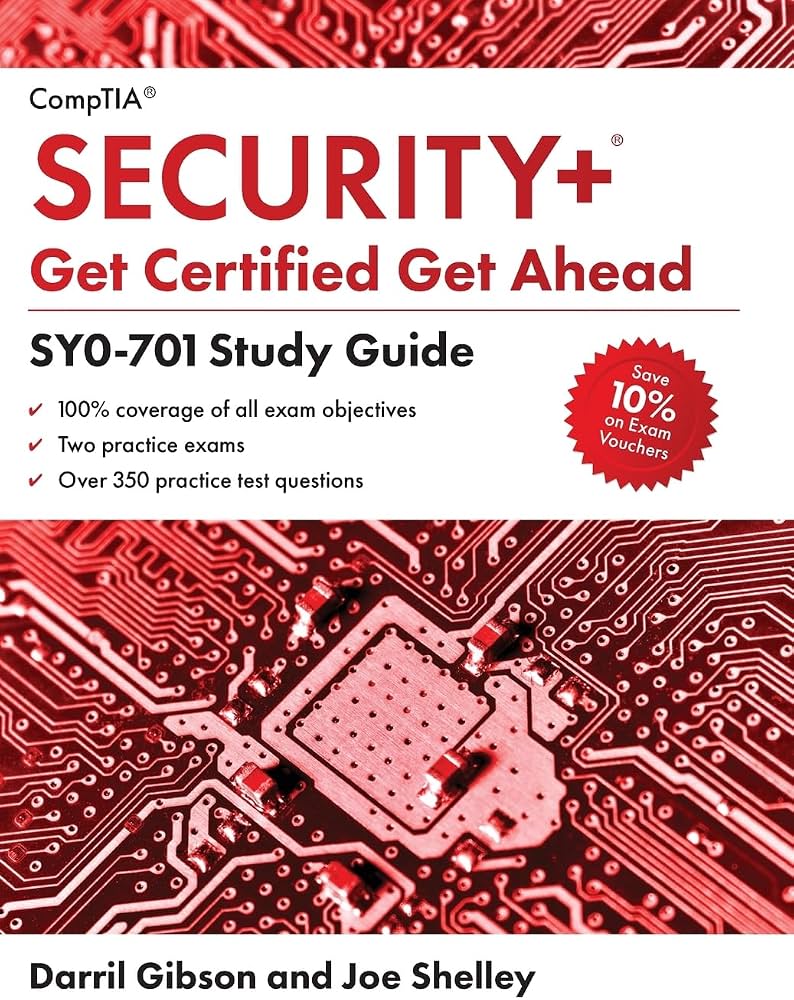
Table of ContentsIs the Get Certified Get Ahead SY0-701 Guide Worth Buying?A Realistic SY0-701 Study Schedule Using This GuideSY0-601 vs. SY0-701: What Actually ChangedBringing It Together CompTIA Security+ SY0-701 is currently the only active version of the exam, and one book keeps coming up in nearly every prep discussion: Darril Gibson's Get Certified Get Ahead. But picking a study guide is only the first decision — you also need a realistic schedule, a clear picture of how SY0-701 differs from the retired SY0-601 so your materials aren't outdated, and a way to actually test your readiness before exam day. Here's how all four pieces fit together. Is the Get Certified Get Ahead SY0-701 Guide Worth Buying? Before committing study hours to any book, it helps to know exactly what you're getting. Here's what stands out about this particular guide: Proven track record. The book has a loyal following because it's straightforward, practical, and relentlessly focused on helping readers pass on their first try, and the series has helped thousands of readers pass the exam on their first attempt across multiple exam versions. Updated authorship team. The current SY0-701 edition is co-authored by Darril Gibson and Joe Shelley — Shelley is a Chief Information Officer working in higher education who oversees information security and privacy programs, IT risk management, and data governance, bringing a practitioner's perspective alongside Gibson's long-running certification-writing background. Digestible structure. Material is organized into 11 chapters, each ending with an "Exam Topic Review" that reinforces the most critical points, which makes it easier to study in short, focused sessions rather than marathon reading blocks. Teaching style people actually credit for results. Gibson's real-world examples and classroom-tested analogies make security principles easy to understand, even for readers with limited IT backgrounds. Heavy practice-question volume. The guide includes a 50-question pre-test, practice questions at the end of every chapter, and a full 90-question practice exam, with every question accompanied by a detailed explanation of why each answer is right or wrong. Free supplementary resources. Buyers get access to free online resources, including additional practice test questions through an online testing platform, extending your practice pool beyond what's printed in the book. Fully current for the active exam version. This edition covers the SY0-701 exam objectives, which remain current through 2027, so you're not risking outdated content the way you would with leftover SY0-601 materials. The consistent theme across reviews is that this guide earns its reputation less from flashy production value and more from clear explanations and a genuinely large volume of practice material — which matters more than most other factors when you're trying to pass on the first attempt. A Realistic SY0-701 Study Schedule Using This Guide Once you've got the book, the next question is how to actually pace yourself. Here's a structured approach built around the guide's 11-chapter format and heaviest-weighted domains (more on those weights in the next section): Week 1 — Diagnostic baseline. Take the 50-question pre-test cold, before reading anything. Don't worry about your score — use it purely to identify which of the five domains you're already comfortable with and which need the most attention. Weeks 2–3 — Front-load the heavy domains. Start with the chapters covering Security Operations and Threats, Vulnerabilities, and Mitigations first, since these two domains alone make up roughly half the exam. Read the chapter, then immediately do the end-of-chapter practice questions — don't batch reading across multiple chapters before testing yourself. Week 4 — Architecture and governance chapters. Move into Security Architecture and Security Program Management and Oversight. These domains lean more conceptual, so pair your reading with real-world scenarios (cloud configurations, compliance frameworks you've encountered at work) to make the material stick. Week 5 — General Security Concepts and cleanup. This domain carries the lowest weight but is often treated as "easy" and under-reviewed — don't skip it. Use this week to also revisit any chapter where your end-of-chapter quiz scores were weak. Week 6 — Full practice exam plus review. Take the complete 90-question practice exam under timed conditions (90 minutes, no notes). Review every missed question's explanation, not just the ones you got wrong — understanding why a distractor answer is wrong is just as valuable as knowing the right one. Final days — Targeted gap-filling only. Use your remaining time exclusively on your weakest one or two domains from the practice exam. Avoid cramming new material in the final 48 hours; focus on review and rest instead. This roughly six-week cadence assumes evening/weekend study time alongside full-time work — extend timelines proportionally if you're newer to IT or compressing further if you already hold adjacent certifications like Network+. SY0-601 vs. SY0-701: What Actually Changed If you've seen older Security+ material floating around — whether a hand-me-down PDF or an out-of-date course — it's worth understanding exactly how the exam changed so you can confirm your study guide (and the one covered above) is aligned to the current version. Aspect SY0-601 (retired) SY0-701 (current) Number of domains Six Five Number of objectives 35 28 Domain 1 Attacks, Threats, and Vulnerabilities — 24% Renamed Threats, Vulnerabilities, and Mitigations —22% Domain 2 Architecture and Design — 21% Renamed Security Architecture — 18% Domain 3 Implementation — 25% (highest weight) Absorbed and redistributed across other domains rather than standing alone Domain 4 Operations and Incident Response — 16% Renamed Security Operations — 28% (now the highest weight) Domain 5 Governance, Risk, and Compliance — 14% Renamed Security Program Management and Oversight — 20% New standalone domain — General Security Concepts — 12%(new addition) Total questions / time Maximum of 90 questions, 90 minutes Maximum of 90 questions, 90 minutes (unchanged) Passing score 750 on a scale of 100–900 750 on a scale of 100–900 (unchanged) Status as of mid-2026 Retired July 31, 2024 Current and only active version The single biggest practical takeaway: >Security Operations jumped from 16% to 28% of the exam, making it the most heavily weighted domain by a wide margin. If you're using any study material — including the Get Certified Get Ahead guide — make sure it's explicitly labeled for SY0-701 rather than a repackaged SY0-601 title, since the weighting shift alone would throw off a study plan built around the old objectives. Bringing It Together The Get Certified Get Ahead SY0-701 guide earns its reputation through clear writing and a genuinely large bank of practice questions rather than flashy extras — which makes it a solid foundation for the six-week study schedule outlined above. Just make sure whatever combination of book, schedule, and practice material you land on is built specifically for SY0-701, since the domain reshuffle from SY0-601 — especially that jump in Security Operations weighting — is significant enough to throw off preparation built on outdated content. Get the version right, follow the practice-test discipline instead of chasing dumps, and the rest is a matter of putting in the study hours. -
- 629
- SPOTO
- 2026-07-29 15:24
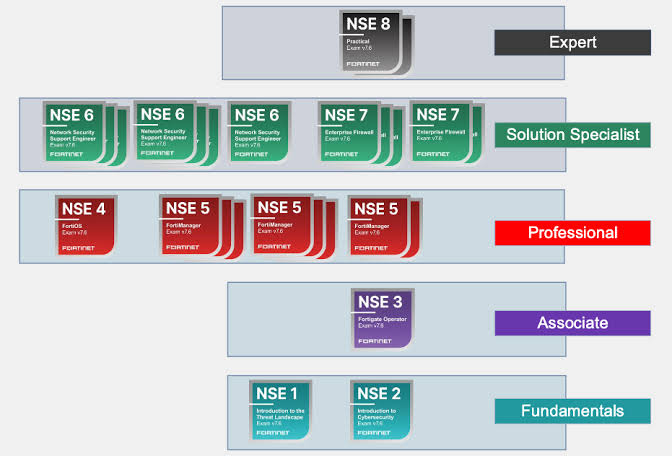
Table of ContentsWhat Actually Changed in the NSE Certification ProgramHow Your Old Certification Maps to the New NSE LevelsHow to Transition Your Existing Fortinet Credentials: A Step-by-Step WorkflowKey Takeaways If you hold — or are working toward — a Fortinet certification, the last few weeks have brought the biggest structural change to the program in years. On July 15, 2026, Fortinet retired its FCF/FCA/FCP/FCSS/FCX naming scheme and restored the familiar NSE 1–8 numbered progression, with new tracks, new recertification rules, and automatic conversion of existing credentials. Below, we break down exactly what changed, how your old certification maps to the new structure, the steps to take if you're mid-certification, and how to find legitimate prep material for the updated exams. What Actually Changed in the NSE Certification Program Effective date: July 15, 2026. Structural change: The program expanded from its previous five-level structure to eight NSE levels, while retaining the four main specialization tracks: Secure Networking, Security Operations, Cloud Security, and SASE. This reverses the shift Fortinet made in October 2023 toward role-based naming, formalizing a hybrid model piloted in late 2025 that pairs named certifications for career positioning with NSE numbers for exam progression. Retired credentials: FCF (Fortinet Certified Fundamentals), FCA (Fortinet Certified Associate), FCP (Fortinet Certified Professional), FCSS (Fortinet Certified Solution Specialist), and FCX (Fortinet Certified Expert) were officially retired on July 15, 2026, replaced by the expanded NSE 1–8 tiered structure. New industry tracks: New industry-focused certifications were introduced, including OT Security and MSSP Security, sitting alongside the core eight-level ladder. Expert level (NSE 8): The top tier saw the most substantive rework. Exams are still aligned with NSE levels, with NSE 8 once again serving as the expert-level benchmark, and the updated structure now uses separate NSE 8 Core and Specialization practical exam modules, alongside written components for initial certification and recertification. Validity and recertification: All certifications under the updated program are valid for two years, with new recertification requirements to keep them current. Passing an NSE 8 practical exam renews all NSE 1–7 certifications, though passing an NSE 5 or NSE 6 exam does not renew an NSE 4 certification — recertification credit generally flows downward from higher exams, not upward. Delivery logistics: Pearson VUE, the official exam delivery partner, suspended exam delivery on July 13–15, 2026 to facilitate the system transition, with candidates who had exams scheduled on those dates required to reschedule. Pricing also shifted for some tiers — the exam fee for NSE 7 exams is set to increase to USD 400 effective November 2, 2026. Existing certifications remain valid: Nothing you already earned disappears. Existing certifications remain valid until their expiration dates, and <FCF, FCA, FCP, FCSS, and FCX certifications remain in your certification history even after the new NSE badges are issued. How Your Old Certification Maps to the New NSE Levels If you're wondering what your existing credential converts to, here's how the official transition rules break down: Old Certification (or exam passed) New NSE Award Track / Notes FCF (Fortinet Certified Fundamentals) NSE 1 and NSE 2 Issue and expiration dates match your FCF certification FCA (Fortinet Certified Associate) NSE 3 Issue and expiration dates match your FCA certification FortiGate Administrator / FortiOS Administrator exam NSE 4 Direct one-to-one mapping regardless of certification status FortiSwitch / Secure Wireless LAN exams NSE 5 – Secure Networking Mapped by exam, not by track name FortiAnalyzer Analyst / FortiSandbox exams NSE 5 – Security Operations Mapped by exam, not by track name FCP (Fortinet Certified Professional), active NSE 4, NSE 5, or NSE 6 Awarded based on the July 15 mapping of your historical exams to certification tracks; issue/expiration dates match your FCP certification FCSS (Fortinet Certified Solution Specialist), active NSE 6 or NSE 7 Awarded based on the July 15 mapping of your historical exams; issue/expiration dates match your FCSS certification FCX (Fortinet Certified Expert) NSE 8 Issue and expiration dates match your FCX certification NSE 6 OT Security exam passed within last 2 years OT Security (industry certification) Awarded as a standalone industry credential Passed a qualifying exam on/after July 15, 2024, no active FCP/FCSS Corresponding NSE certification Eligible for direct NSE award even without a completed legacy certification As the table shows, the conversion is largely automatic and based on which individual exams you've passed — not just which named certification you were pursuing. How to Transition Your Existing Fortinet Credentials: A Step-by-Step Workflow If you currently hold an active FCP, FCSS, FCX, or individual passed exams, follow this workflow to confirm and claim your updated NSE status: Check your current certification status. Log into your Fortinet Certification Overview or Certification Page to see exactly which credentials and exam passes are on file under your account. Locate the official mapping table. Review Fortinet's exam mapping table on the Training Institute Help Desk to see precisely which NSE level(s) your specific exam history maps to — mappings are based on individual exams passed, not just certification titles. Do nothing if you hold an active FCP or FCSS. You will automatically be issued an NSE certification badge and certificate on July 15, 2026 for each active FCP/FCSS certification you hold, with no application or fee required. Check eligibility if you don't hold an active certification. If you don't hold an FCP/FCSS certification, or it hasn't been renewed, you're still eligible for an NSE certification if you passed a qualifying exam on or after July 15, 2024. Confirm your issue and expiration dates. The issuance and expiration dates of your new NSE certification are based on the date your latest qualifying exam was passed, so cross-check this against your own records once the new badge appears. Plan future recertification around the new rules. Remember that passing a lower-level exam does not automatically renew a higher one (for example, an NSE 5 or NSE 6 pass won't renew NSE 4) — map out which exam you actually need to take before your existing credential expires. Reschedule if you were caught in the blackout window. Anyone with an exam scheduled during the July 13–15, 2026 Pearson VUE suspension needed to reschedule, so if that applied to you, confirm your new appointment reflects the updated exam codes. If any of this looks unclear for your specific exam history, Fortinet's Training Institute Help Desk is the authoritative source — the mapping examples above cover the common cases, but individual exam combinations can vary. Key Takeaways The July 15, 2026 overhaul is good news for most certification holders: existing credentials remain valid, conversions to the new NSE levels happen automatically in the vast majority of cases, and the underlying exam content for many tracks — like NSE 4 — hasn't fundamentally changed, just the naming around it. The main action items are to confirm your mapped NSE status once it posts to your account, understand that recertification credit doesn't always flow upward between levels, and make sure any exam you book uses the current post-transition exam code. For anything not covered by the general mapping rules above, the Fortinet Training Institute Help Desk remains the definitive source for your specific certification history. -
- 554
- SPOTO 2
- 2026-07-29 10:25
Table of Contents1. What Makes the CISSP Worth the Effort?2. Recent Exam Updates: The April 2024 Blueprint Refresh3. The 8 CBK Domains: What You're Actually Tested On4. Requirements and How to Prepare5. Typical Salary Ranges for CISSP Roles6. Combining CISSP with ISACA Certifications Early in a cybersecurity career, most of your day involves looking at terminal screens, analyzing log files, or patching vulnerabilities. But as you step toward senior architecture or management, the job changes. Executives don't usually ask which firewall port to close; they ask whether a new system exposes the company to regulatory fines or operational downtime. That shift in mindset is exactly what the Certified Information Systems Security Professional (CISSP) credential tests. (A quick administrative note before diving in: While cybersecurity pros frequently pair CISSP with ISACA certifications like CISA or CRISC, CISSP itself is owned and maintained by ISC2. The two organizations simply complement each other—ISC2 handles security engineering and strategy, while ISACA specializes in IT audit and GRC.) Here is a practical, detailed look at why the CISSP remains so influential, what changed in the recent exam refresh, how the syllabus breaks down, and what it takes to pass. 1. What Makes the CISSP Worth the Effort? If you look at senior job postings across defense, banking, healthcare, or tech, CISSP is often listed as a mandatory filter. That isn't just HR habit. The exam forces you to stop thinking strictly like a technical engineer and start evaluating security through a business lens. Broad industry recognition: It meets ISO/IEC Standard 17024 and is accepted globally across government and private sectors in over 160 countries. Prerequisite for senior roles: It is routinely required for roles like Enterprise Security Architect, Information Security Manager, and Chief Information Security Officer (CISO). Comprehensive perspective: Rather than focusing on one specific tool or cloud vendor, it tests your ability to connect technical controls (like access management and encryption) with corporate strategy, legal compliance, and risk tolerance. 2. Recent Exam Updates: The April 2024 Blueprint Refresh ISC2 regularly updates the CISSP exam to reflect modern infrastructure—like cloud-native apps, remote workforce security, and software supply chain threats. The most recent syllabus refresh took effect in April 2024. Key points about the current exam structure: Domain weight adjustments: Security and Risk Management (Domain 1) increased slightly from 15% to 16%, while Software Development Security (Domain 8) adjusted from 11% to 10%. Modern topic additions: The test now includes heavier emphasis on concepts like Zero Trust Architecture, Secure Access Service Edge (SASE), passwordless authentication, quantum key distribution, and software supply chain risks. Adaptive test format (CAT): In English, the exam uses Computerized Adaptive Testing. You get up to 3 hours to answer between 100 and 150 questions. The testing algorithm continuously re-evaluates your ability level after each response to determine whether you have proven passing competence across all domains. 3. The 8 CBK Domains: What You're Actually Tested On The CISSP material covers eight core domains within ISC2's Common Body of Knowledge (CBK): Domain 1: Security and Risk Management (16%): Security governance, policies, legal issues, GDPR/privacy laws, business continuity planning (BCP), and threat modeling. Domain 2: Asset Security (10%): Data classification, asset ownership, privacy protections, handling requirements, and secure data disposal. Domain 3: Security Architecture and Engineering (13%): Security design principles, cryptography, vulnerability mitigation in cloud/physical setups, Zero Trust, and SASE concepts. Domain 4: Communication and Network Security (13%): Securing network hardware, transmission channels, wireless protocols, and perimeter defenses. Domain 5: Identity and Access Management (13%): Access control models, identity lifecycles, multi-factor authentication (MFA), passwordless access, and federated identities. Domain 6: Security Assessment and Testing (12%): Security control testing, penetration testing strategy, vulnerability scanning, and audit log analysis. Domain 7: Security Operations (13%): Day-to-day operations, incident response, digital forensics, continuous monitoring, and threat hunting. Domain 8: Software Development Security (10%): Application security controls, secure software development lifecycles (SDLC), and software supply chain risks. 4. Requirements and How to Prepare Passing the test is only part of getting certified. ISC2 enforces strict experience rules: 5 Years of Experience: You must document at least 5 years of cumulative, paid work experience covering at least two of the eight domains. If you hold a four-year college degree or an approved credential (such as CISA or Security+), you get a one-year waiver, dropping the requirement to 4 years. Adopt the "Manager" Mindset: The biggest trap for technical candidates is wanting to fix things immediately. On the CISSP exam, if a question asks what to do when a breach occurs, the correct answer is usually to assess the impact, follow established policy, or inform leadership—not to open a terminal and start changing firewall rules yourself. Practice Scenario Logic: Because questions test judgment under tight time constraints, doing practice exams is essential. Working through realistic question pools—like the prep materials from SPOTO—helps you get used to ISC2’s wording style and teaches you how to pace yourself during the adaptive test. Keeping It Active: Once certified, you maintain the credential by paying an annual fee and submitting 120 Continuing Professional Education (CPE) credits every three years. 5. Typical Salary Ranges for CISSP Roles Because CISSP holders bridge the gap between technical teams and executive leadership, compensation remains strong across senior levels. While location and company size drive variance, general salary bands for CISSP-aligned roles look like this: Senior Security Engineer / Architect: Professionals designing network defenses and cloud security architectures usually earn base salaries between $115,000 and $145,000. Information Security Manager / GRC Lead: Managers running security operations, risk programs, and compliance audits generally earn between $140,000 and $175,000. Chief Information Security Officer (CISO) / Security VP: Executive leaders running overall enterprise security and presenting to boards command total packages from $180,000 to $250,000+. 6. Combining CISSP with ISACA Certifications If you want a well-rounded career in tech governance, CISSP pairs exceptionally well with ISACA credentials: CISSP + CISA: Combines deep security engineering with formal IT auditing capability. CISSP + CRISC: Connects security architecture knowledge with enterprise-level risk quantification and governance frameworks. -
- 562
- SPOTO 2
- 2026-07-28 10:26
Table of Contents1. Why Mixing CPA and IT Governance Credentials Pays Off2. Syllabus Updates: The CPA Evolution Model3. Exam Content and Structure Breakdown4. Licensure Steps and Study Approach5. Real-World Pay and Salary Growth6. ISACA Certifications to Pair with a CPA Financial audits and IT controls used to be handled in completely different corners of an organization. Accountants looked at spreadsheets and ledgers, while IT teams handled user access and firewall logs. That separation barely exists anymore. When companies run financial reporting on automated cloud platforms, auditing a balance sheet means auditing the technology behind it. This shift is why so many finance and risk professionals look at combining the Certified Public Accountant (CPA) license with ISACA certifications like CISA or CRISC. (To clear up a common misconception: ISACA manages IT-focused credentials like CISA and CRISC, whereas CPA licenses are granted by state accountancy boards using the AICPA exam. However, pairing a CPA with an ISACA credential creates one of the most versatile skill sets in risk advisory and IT audit.) Here is a practical look at how the CPA exam has adapted to technology, what it covers, realistic salary outcomes, and how it aligns with ISACA standards. 1. Why Mixing CPA and IT Governance Credentials Pays Off In the past, an auditor might focus purely on internal controls or purely on network security. Today, major companies and advisory firms want people who can bridge both worlds. Key benefits of holding both accounting and IT audit credentials include: Full-spectrum coverage: You can evaluate financial statements (SOX compliance) alongside IT general controls (ITGCs) and SOC engagements (SOC 1, SOC 2, and SOC 3). High market demand: Advisory firms, Big Four agencies, and enterprise risk departments compete heavily for auditors who understand both balance sheets and database access controls. Faster career trajectory: Having dual expertise makes it easier to step into senior roles like Risk Advisory Lead, IT Audit Director, or Chief Compliance Officer. 2. Syllabus Updates: The CPA Evolution Model To make sure new CPAs understand tech risk and data analytics, the CPA exam went through its largest overhaul in decades under the CPA Evolution model. The exam structure uses a core-plus-discipline format: Three mandatory Core sections: Every CPA candidate takes Core exams in auditing, accounting, and tax. One specialized Discipline section: Candidates choose one discipline to demonstrate deeper technical knowledge. The Information Systems and Controls (ISC) discipline: For anyone leaning toward IT audit, GRC, or systems advisory, the ISC discipline is the obvious choice. Its content aligns directly with ISACA’s core audit domains, focusing on system controls, data privacy, and vendor risk. 3. Exam Content and Structure Breakdown Earning the CPA license requires passing four sections in total, combining multiple-choice questions with complex task-based simulations: Core Section 1: Auditing and Attestation (AUD) Focuses on audit planning, evaluating internal controls, gathering evidence, ethics, and reporting standards under AICPA and PCAOB guidelines. Core Section 2: Financial Accounting and Reporting (FAR) Covers financial statement preparation, GAAP compliance, revenue recognition, and reporting for corporate and non-profit entities. Core Section 3: Regulation (REG) Evaluates business law, federal tax compliance, ethics, and professional responsibility. Discipline Choice: Information Systems and Controls (ISC) IT Governance & Service Management: Aligning IT strategy with business goals, third-party vendor risks, and change management controls. Data Management & Security: Database structures, data privacy regulations, logical access controls, and encryption standards. SOC Reporting: Planning, executing, and reviewing SOC 1, SOC 2, and SOC 3 engagement reports. (If you plan to add ISACA credentials like the CISA later, studying for the CPA ISC discipline gives you a huge head start on ISACA's testing logic.) 4. Licensure Steps and Study Approach Getting a CPA license requires clearing state board requirements alongside passing the exam: 150 Education Credits: Most states require 150 college semester hours (usually a bachelor's degree plus 30 extra credits in accounting or business). Supervised Experience: You will need 1 to 2 years of accounting, audit, or risk advisory experience verified by an active CPA holder. Targeted Exam Preparation: The CPA exam relies heavily on multi-step task simulations rather than simple recall. Working through structured practice platforms—such as the study modules from SPOTO—helps you master simulation formats, identify weak spots, and manage your pacing across long exam sections. Annual CPE Credits: Active CPAs must complete 40 Continuing Professional Education (CPE) hours each year to keep their license active. 5. Real-World Pay and Salary Growth Because professionals who understand both financial accounting and IT security controls are in short supply, compensation across these roles remains strong. While pay varies based on location and company size, typical salary ranges include: Staff Accountant / IT Audit Associate: Professionals starting out in routine audits and control testing usually earn base salaries between $70,000 and $90,000. Senior Audit Consultant / Risk Manager: Experienced auditors managing engagement teams, evaluating SOC reports, and reviewing cloud controls earn between $105,000 and $138,000. Audit Partner / Chief Audit Executive (CAE): Senior leaders overseeing corporate audit departments or managing firm practices command total compensation packages from $150,000 to $220,000+. 6. ISACA Certifications to Pair with a CPA If your long-term goal is to build a career in technology governance or cybersecurity risk, these ISACA credentials pair exceptionally well with a CPA license: Certified Information Systems Auditor (CISA): ISACA's premier credential for auditing IT infrastructure, controls, and technology systems. Certified in Risk and Information Systems Control (CRISC): Focuses on enterprise risk management, risk quantification, and control design. Certified Information Security Manager (CISM): Aimed at professionals managing and designing enterprise cybersecurity programs. -
- 696
- SPOTO 2
- 2026-07-24 10:43
Table of Contents1. What Is the CII IF4 Certification?2. Why the IF4 Matters in the Industry3. Exam Format, Content, and Recent Updates4. Recent Syllabus Updates5. Entry Requirements and How to Prepare6. Career Value and Salary Trends7. Next Steps and Related CII Qualifications When a water pipe bursts in an office building or a commercial fleet vehicle gets damaged, an insurance policy stops being an abstract legal document and turns into a live claim. How smoothly that claim is evaluated, calculated, and settled determines whether an insurer keeps its clients and stays profitable. For anyone working in or aiming for the claims side of the industry, the Chartered Insurance Institute's IF4 (Insurance Claims Handling Process) is a key practical qualification. It sits inside the CII Certificate in Insurance framework and zeroes in on the operational and legal mechanics of managing claims from start to finish. Here is a practical, ground-level breakdown of what the IF4 exam covers, why it carries weight in the market, expected salary levels, and how to pass on your first attempt. 1. What Is the CII IF4 Certification? The CII IF4 is an RQF Level 3 qualification unit administered by the UK-based Chartered Insurance Institute. While introductory units like IF1 cover broad market structures and regulation, IF4 focuses specifically on the machinery of claims handling. Passing the IF4 exam earns you 15 CII credits. To achieve the full Certificate in Insurance (Cert CII), you need 40 credits in total—including a core unit like IF1 or LM1. Clearing IF4 gets you nearly halfway to earning those "Cert CII" designatory letters behind your name. Although built around English legal principles (like the Insurance Act 2015), the core concepts tested in IF4—such as indemnity, subrogation, proximate cause, and financial reserving—apply directly across international insurance hubs in Europe, the Middle East, and Asia. 2. Why the IF4 Matters in the Industry Claims departments balance two competing priorities: paying valid claims promptly to satisfy policyholders, and stopping invalid or fraudulent claims to protect the insurer's bottom line. Holding the IF4 qualification proves to employers that you understand how to navigate that balance: You know the underlying legal principles: You understand how to apply doctrines like proximate cause, contribution, and subrogation when evaluating a loss. You can interpret policy terms: You know how to read policy conditions, excesses, deductibles, and sub-limits across motor, household, property, and liability policies. You spot fraud and leakage early: The syllabus teaches you how to identify red flags and prevent claims leakage—unnecessary costs caused by operational delays or overpayment. You understand regulatory duties: You learn how to comply with Financial Conduct Authority (FCA) expectations around fair customer treatment, vulnerable customer handling, and formal dispute resolution. 3. Exam Format, Content, and Recent Updates The IF4 exam is a 2-hour, computer-based test consisting of 75 multiple-choice questions. The standard nominal pass mark is 70%. The test covers seven core learning areas, combining factual knowledge with practical scenario questions: General principles of claims handling: Legal validity, notification requirements, proximate cause rules, and breach of condition consequences. Insurance products and services: Coverage features and extensions across personal, commercial property, liability, motor, and travel lines. Claims administration and considerations: The structure of claims departments, setting financial reserves, fraud detection, and complaint resolution. Claims procedures: Step-by-step handling workflows from initial notification through to final settlement. Operations and supporting systems: IT claims platforms, working with external experts like loss adjusters, and data protection compliance. Settlement calculations: Calculating indemnity payments, applying salvage rules, and managing subrogation recoveries. Expense management: Monitoring department costs and controlling operational claims leakage. 4. Recent Syllabus Updates The CII regularly updates the IF4 syllabus to keep pace with changing rules and market practices. Recent revisions focus heavily on the FCA's Consumer Duty requirements (ensuring good outcomes for retail customers), updated Financial Ombudsman Service (FOS) award limits, digital claims processing systems, automated fraud scoring tools, and environmental considerations during property repairs. 5. Entry Requirements and How to Prepare There are no formal educational prerequisites to take the IF4 exam. Anyone looking to build a career in insurance can register directly through the CII. The CII recommends spending around 60 study hours on the material. A straightforward study approach includes: Master the legal terminology: Make sure you can explain concepts like indemnity, proximate cause, subrogation, and contribution without getting them mixed up. Practice policy calculations: Practice applying deductibles, policy limits, and salvage offsets to hypothetical claim figures so you don't lose easy marks on calculation questions. Use realistic mock exams: The CII relies heavily on scenario-based questions where you must pick the best operational step. Working through updated practice question pools—such as those provided by SPOTO—helps you get used to the multiple-choice style, catch gaps in your knowledge, and manage your pace during the two-hour exam. 6. Career Value and Salary Trends Holding formal claims credentials makes you significantly more competitive at insurance companies, brokerages, third-party administrators (TPAs), and loss-adjusting firms. While salaries vary by region and specialist area, standard UK market ranges for roles using IF4 knowledge include: Trainee / Entry-Level Claims Handler: £24,000 to £32,000 annually, handling standard personal lines or straightforward property claims. Senior Claims Handler / Loss Adjuster: £35,000 to £50,000 for experienced handlers managing high-value commercial property, casualty, or complex liability claims. Claims Operations Manager / Team Lead: £52,000 to £70,000+ for senior leaders overseeing operational workflows, vendor networks, and leakage reduction strategies. 7. Next Steps and Related CII Qualifications After passing IF4, you can build on your momentum by taking complementary units toward your Cert CII or higher-level designations: CII IF1 (Insurance, Legal and Regulatory): The compulsory foundation unit covering legal frameworks, regulation, and market structure. CII IF2 (General Insurance Business): Explores underwriting principles, rating, customer service, and market operations. CII IF3 (Insurance Underwriting Process): Focuses on the risk assessment, pricing, and acceptance side of insurance contracts. CII M05 (Insurance Law): A Diploma-level unit offering deep technical study of contract law and insurance legislation. CILA Qualifications: Specialized exams offered by the Chartered Institute of Loss Adjusters for those aiming to focus purely on field investigations and complex claims adjusting. -
- 595
- SPOTO 2
- 2026-07-16 10:26
Table of Contents1. The Real Value: Why It is Still the Default Baseline2. The 2026 Update Puzzle: SY0-701 vs. SY0-8013. Inside the Exam: What You Actually Have to Master4. The Financial Return: What Does It Actually Pay?5. How to Prepare and Pass on Your First Attempt If you are looking to break into cybersecurity, you have probably run into a wall of conflicting advice. Some people will tell you that certifications don't matter anymore, while others insist you need a stack of paper to get your resume noticed. The reality lies somewhere in the middle. Security managers are tired of paper-only experts, but they still need a baseline to filter out the hundreds of applications hitting their desks. For over two decades, the CompTIA Security+ has been that default gatekeeper. But with major curriculum updates hitting the exam this year and new threats like automated social engineering and cloud-native exploits dominating the headlines, you need to know exactly what this credential is worth right now, what is on the test, and how the latest changes affect your timeline. 1. The Real Value: Why It is Still the Default Baseline It is easy to find newer, flashier security badges online, but Security+ maintains its massive market share for a couple of practical reasons. First, it is globally recognized and aligned with the ISO 17024 standard. More importantly for anyone looking to land public sector work, it meets the strict requirements of the US Department of Defense directives (like DoD 8140/8570). If you want to work for a government agency, a branch of the military, or a federal defense contractor, you cannot even get past the automated HR filters without this certification. Second, it focuses on vendor-neutral concepts. Instead of teaching you how to configure a specific brand of firewall, Security+ teaches you how defensive architectures actually work. Once you understand the mechanics of identity federation, zero-trust structures, and protocol analysis, you can easily apply those concepts to whatever technology stack an employer is using. 2. The 2026 Update Puzzle: SY0-701 vs. SY0-801 If you are starting your studies today, you need to pay close attention to the version timelines. CompTIA refreshed the live SY0-701 exam objectives on July 1, 2026. This was not a complete overhaul of the exam code, but a targeted update to address the rapid rise of generative AI threats, expanded cloud-native attack surfaces, and new federal compliance standards. At the same time, CompTIA is preparing to preview the next major revision, SY0-801, in late October 2026, with general availability expected in early 2027. This leaves many candidates wondering: Should I wait for the 801 version? Almost certainly not. The current SY0-701 study materials are incredibly mature. Test-prep ecosystems, practice labs, and textbooks have had over two years to refine their content. If you wait for the SY0-801 release, you will be dealing with first-generation study guides and unproven practice questions while your competitors are already certified and applying for jobs. Any Security+ badge you earn in 2026 is valid for three full years from your test date, and employers do not care which specific exam code you sat to get it. Take the mature test now and get into the market. 3. Inside the Exam: What You Actually Have to Master The exam consists of a maximum of 90 questions, and you have exactly 90 minutes to tackle them. The real hurdle isn't the multiple-choice questions; it is the Performance-Based Questions (PBQs). These PBQs drop you into simulated environments where you have to do actual hands-on work—like analyzing firewall logs to block an ongoing attack, configuring a secure wireless access point, or setting up access control lists (ACLs). The blueprint is split across five integrated domains: (1)General Security Concepts (12%) This is the foundational vocabulary of security. You will be tested on the classic CIA triad (Confidentiality, Integrity, and Availability), essential cryptographic concepts, and the differences between physical, technical, and administrative controls. (2)Threats, Vulnerabilities, and Mitigations (22%) This domain forces you to think like an attacker. You need to identify indicators of compromise, recognize advanced social engineering tactics, and understand how modern exploits target web applications. You will also need to know how to interpret vulnerability scans and manage software patches effectively. (3)Security Architecture (18%) Here, you learn how to design a resilient network. You must understand secure system design across hybrid infrastructures, local networks, and public clouds. Expect scenarios involving zero-trust implementation, micro-segmentation, and secure identity management. (4)Security Operations (28%) As the heaviest domain, this section is highly practical. It covers active defense monitoring using tools like SIEM platforms, packet sniffers, and endpoint detection software. You will also need to know the steps to contain, investigate, and recover from security incidents. (5)Security Program Management and Oversight (20%) The final section covers governance and compliance. You will learn how to conduct risk assessments, manage third-party vendor risks, and ensure your team's technical operations comply with global privacy regulations like GDPR or HIPAA. 4. The Financial Return: What Does It Actually Pay? While a certification alone won't magically land you a six-figure job without some effort, Security+ serves as a powerful accelerator to move out of entry-level support roles and onto a dedicated security track. Here is what the salary landscape looks like for certified professionals: Tier 1 SOC Analyst / Junior Security Analyst: In these roles, you will monitor alert queues and triage incoming threats. The average starting salary for these positions sits between $65,000 and $82,000 per year. Systems Administrator / Security Specialist: If you combine your Security+ with a year or two of system administration experience, you can expect salaries in the $85,000 to $105,000 range. Security Engineer / Consultant: As you gain more experience and transition into building infrastructure, salaries regularly climb past $115,000+. 5. How to Prepare and Pass on Your First Attempt Because CompTIA uses a binary grading system on its simulated Performance-Based Questions—meaning you don't get partial credit if you make a tiny configuration mistake in a lab—passive studying will only get you so far. Reading a textbook or watching videos is fine for learning the terminology, but you have to build muscle memory for diagnostic command-line tools and configuration interfaces. When you are ready to pivot from learning concepts to practicing under pressure, using high-fidelity test simulators is the most efficient approach. SPOTO offers highly targeted Security+ practice questions and custom exam simulators designed to mimic the exact style, scenario structures, and interactive PBQ environments you will face at the testing center. Testing yourself against these realistic scenarios helps you find your conceptual blind spots early, master your pacing, and walk into your exam with the confidence to pass on your first try. -
- 670
- SPOTO 2
- 2026-07-16 10:12
Table of Contents1. The "Last Change" Evolution: Demystifying the N10-009 Transformation2. The Financial Return: Market Salaries and Career Paths3. The Realities of the Testing Room4. Strategic Pacing to Your First-Attempt Success Even as cloud computing and software-defined architectures dominate tech headlines, physical and virtual networks remain the absolute backbone of global business operations. No organization can deploy high-scale cloud platforms or integrate intelligent automation without a highly stable, secure, and properly routed local infrastructure. For IT professionals aiming to establish a bulletproof career path, finding a credential that validates true foundational engineering competency is essential. The CompTIA Network+ has long served as the industry-standard, vendor-neutral baseline for network infrastructure. To maximize the value of this certification, you must understand how the latest structural updates have reshaped the exam blueprints and what kind of market premium the credential commands in the current hiring landscape. 1. The "Last Change" Evolution: Demystifying the N10-009 Transformation If you are preparing for the exam right now, you are targeting the active N10-009 version. This syllabus officially launched on June 20, 2024, fully replacing the legacy N10-008 exam which retired later that December. CompTIA updates this certification roughly every three years to align the curriculum directly with modern enterprise networks. The transition from N10-008 to N10-009 represented a massive, structural cleanup of the domains to focus on modern, real-world networking environments. The major updates in the current blueprint focus heavily on several key areas: The Rise of Cloud and Software-Defined Networking (SDN): Rather than treating virtual private networks (VPNs) and local routing as isolated hardware operations, the new syllabus focuses heavily on hybrid cloud integration, Software-Defined Wide Area Networks (SD-WAN), and containerized virtual environments. Modern Security Integration: In the previous N10-008 version, security was treated as a highly academic, distinct category. Under N10-009, security basics are tightly integrated into physical configurations. The security domain itself was slightly reduced to focus strictly on network-level defenses, such as Zero-Trust architectures, access control lists (ACLs), and segmenting dynamic local fabrics. Streamlined Troubleshooting: The troubleshooting domain remains the heaviest weighted section of the exam. Examiners expect you to diagnose routing loops, interface misconfigurations, and IP allocation failures across wired, wireless, and cloud hybrid environments in real time. The active N10-009 framework evaluates candidate proficiency across five streamlined, highly logical domains: Networking Concepts (23%) Network Implementation (20%) Network Operations (19%) Network Security (14%) Network Troubleshooting (24%) 2. The Financial Return: Market Salaries and Career Paths The Network+ credential is not just a theoretical badge; it is a direct operational asset that provides immediate differentiation on your resume. Because it is vendor-neutral, employers know you understand the core mechanics of routing and switching rather than just memorizing a single manufacturer’s proprietary command-line strings. In 2026, the financial reward for holding a verified Network+ certification remains highly compelling: Entry-Level Infrastructure Roles: For those stepping into junior system administrator, network technician, or tier-2 helpdesk support positions, a Network+ certification typically commands a starting salary range between $55,000 and $80,000 annually. Mid-Level Specialization: As you build two to three years of practical, hands-on experience alongside your Network+ foundation, you can easily transition into dedicated Network Administrator or Systems Engineer roles. These mid-level positions regularly scale into the $80,000 to $105,000+ compensation bracket, depending on local cost of living and geographic enterprise demands. The Long-Term Stepping Stone: Many engineers treat Network+ as a required platform to launch into advanced cloud security, specialized Cisco architecture, or high-tier DevOps roles, which routinely scale into deep six-figure salaries. 3. The Realities of the Testing Room The physical exam consists of a maximum of 90 questions to be completed in a strict 90-minute window. To pass, you must secure a minimum score of 720 on a scale ranging from 100 to 900. The biggest challenge for most candidates is the format of the questions. The Pearson VUE testing engine mixes traditional multiple-choice questions with demanding, interactive Performance-Based Questions (PBQs). These PBQs put you directly inside simulated terminals and network maps where you must drag and drop physical cables, configure basic switch ports, or isolate a routing mismatch under a ticking clock. Because these lab scenarios enforce strict, binary grading metrics—meaning you receive no partial credit for an incomplete configuration change—you must enter the testing center with absolute configuration speed and precision. 4. Strategic Pacing to Your First-Attempt Success Relying on passive video guides or standard textbook reading is rarely enough to clear these strict performance-based requirements. To build real command-line intuition, you must actively test your diagnostic reflexes inside realistic, simulated test environments. When you are ready to pivot from initial reading into focused review, using highly precise, professionally audited mock resources is your most efficient strategy. SPOTO provides meticulously structured Network+ practice question pools and comprehensive exam simulators fully aligned with the active N10-009 blueprint. Using these high-fidelity study platforms to practice parsing command line outputs, refine your timing across simulated PBQs, and identify configuration blind spots beforehand guarantees you can approach the official Pearson VUE exam with absolute clarity and secure your infrastructure credential on your very first try. -
- 596
- SPOTO 2
- 2026-07-15 10:44
Table of Contents1. The Network Foundation: CompTIA Network+2. The Security Gatekeeper: CompTIA Security+ (The SY0-801 Paradigm)3. The Technical Pinnacle: CompTIA SecurityX4. Maximizing Your Study Efficiency The enterprise IT landscape has moved decisively past generalized cloud transitions and superficial automation hype. As organizations face real-world security vulnerabilities from automated threat actors, complex hybrid architectures, and the introduction of decentralized artificial intelligence, the market demand for verified, hands-on engineering talent has reached an all-time high. If you are planning your professional training roadmap, targeting credentials that reflect these modern infrastructure realities is the most direct way to maximize your market premium. CompTIA has spent the last few years aggressively modernizing its portfolio—introducing dedicated AI objectives, cloud-native frameworks, and specialized expert tiers. Focusing on the most relevant CompTIA paths can align your technical skills with top-tier enterprise compensation packages. 1. The Network Foundation: CompTIA Network+ Many professionals attempt to jump straight into advanced security certifications without establishing core infrastructure literacy. This strategy frequently backfires during live technical interviews. Enterprise networks run on highly complex physical, virtual, and logical layers that require immediate, real-world troubleshooting reflexes. What the Blueprint Evaluates CompTIA Network+ focuses directly on managing and configuring modern corporate infrastructures. The active syllabus requires deep fluency in IPv4 and IPv6 subnetting parameters, dynamic routing protocols like Open Shortest Path First (OSPF), and local access switching fabrics. Candidates must prove they can diagnose localized connectivity errors—such as interface duplex mismatches, hardware port degradation, and configuration anomalies within Virtual LAN (VLAN) trunks—using standard command-line diagnostic tools. 2027 Earning Potential Securing a Network+ credential provides immediate separation from low-tier helpdesk roles. Across the IT landscape, professionals holding this certification can expect an average annual salary ranging from $70,000 to $85,000. For engineers who leverage this training to transition fully into dedicated network administration or systems management roles, total compensation frequently scales past $95,000, depending on geographic demands. 2. The Security Gatekeeper: CompTIA Security+ (The SY0-801 Paradigm) The cybersecurity landscape has changed drastically, and entry-level security credentials have evolved to match. The deployment of the updated CompTIA Security+ SY0-801 framework has established a much more rigorous benchmark for technical professionals entering the defensive perimeter. What the Blueprint Evaluates The modern Security+ blueprint leaves behind simple vocabulary memorization to evaluate how engineers handle complex corporate environments. The syllabus places intense weight on a few critical domains: AI and Large Language Model (LLM) Risk Profiles: Understanding how threat actors weaponize intelligent automation and how localized AI pipelines introduce fresh data leakage vulnerabilities. Modern Perimeter Architecture: Configuring Secure Access Service Edge (SASE) integrations, Software-Defined Wide Area Networks (SD-WAN), and containerized workload security. Cloud Security Posture Management (CSPM): Utilizing automated tooling to continuously audit hybrid assets and ensure regulatory compliance. 2027 Earning Potential Earning a Security+ credential serves as the baseline requirement for most corporate security operations centers (SOCs) and government-aligned defense roles. Entry-level practitioners, such as Tier 1 SOC Analysts or junior security technicians, typically command starting salaries between $65,000 and $75,000. As you build two to four years of practical experience handling live incidents, this exact foundational certification helps elevate your market value into the $80,000 to $110,000 bracket for mid-level Cybersecurity Analyst positions. 3. The Technical Pinnacle: CompTIA SecurityX CompTIA officially retired its legacy Advanced Security Practitioner (CASP+) designation to make room for a thoroughly overhauled, expert-level track: CompTIA SecurityX. Operating under the CAS-005 blueprint, this certification is engineered strictly for senior engineers and technical architects who want to remain fully hands-on rather than transitioning into pure administrative or budgetary management. What the Blueprint Evaluates SecurityX strips out introductory overviews to test high-level architectural design and implementation under pressure. The exam relies heavily on performance-based sandboxes that evaluate a candidate’s capacity to handle advanced security engineering tasks: Post-Quantum Cryptography: Transitioning traditional encryption standards to resilient, next-generation algorithmic frameworks capable of resisting advanced decryption threats. Compliance-as-Code & DevSecOps: Integrating automated security policy evaluation directly into continuous integration and continuous deployment (CI/CD) pipelines. Zero-Trust Infrastructure Synthesis: Engineering deep micro-segmentation models across distributed, cloud-native enterprise environments. 2027 Earning Potential Because SecurityX features zero partial credit on its highly complex simulation items, it serves as a powerful validation tool for elite talent. Senior security architects, principal infrastructure engineers, and technical directors holding this expert-level credential command premium compensation packages, with average annual salaries spanning from $90,000 to well over $150,000 in major enterprise tech corridors. 4. Maximizing Your Study Efficiency Navigating these modernized blueprints requires a significant shift away from passive learning models. Because the updated testing engines prioritize scenario-based prompts and live diagnostic execution, reading through a dry textbook is rarely enough to secure a passing score at the Pearson VUE testing center. You must build clear pattern recognition and learn to parse complex log files under strict time constraints. When you are ready to baseline your technical reflexes and ensure you can handle the exact question structures utilized by the live examiner, incorporating realistic evaluation engines into your routine is highly recommended. SPOTO offers meticulously targeted practice question banks and high-fidelity exam simulators fully updated to match the active CompTIA frameworks, including the latest SY0-801 security objectives and advanced SecurityX engineering scenarios. Using these testing resources to isolate your technical blind spots and build pacing confidence guarantees you can approach your official exam date with complete clarity and clear your target certification on the very first attempt. -
- 561
- SPOTO 2
- 2026-07-15 10:37
Table of Contents1. The Exam Mechanics: Surviving the Pearson VUE Sandbox2. Deconstructing the Technical Pillars3. Real-World Preparation Strategy Let's be honest about high-level cybersecurity certifications: a lot of them are incredibly dry. If you are a senior engineer or architect who loves being in the weeds of a network, you have probably looked at executive-level badges and felt completely uninspired. You don't want to spend your career managing budgets or writing policy spreadsheets; you want to design secure systems, build resilient infrastructure, and stop complex attacks. CompTIA recognized this gap when they rebranded and heavily updated their flagship advanced exam. The legacy CASP+ has officially evolved into CompTIA SecurityX under the active CAS-005 syllabus. This change aligns the credential with the "X" expert tier, creating a true capstone for technical professionals who intend to remain hands-on practitioners. If you want to clear this elite hurdle, you need to understand exactly how the exam is structured and what technical domains you will be expected to master. 1. The Exam Mechanics: Surviving the Pearson VUE Sandbox Before looking at the technical blueprints, you need to know what you are walking into at the testing center. SecurityX is not a test you can pass by simply cramming flashcards or relying on passive recognition. The exam gives you a maximum of 90 questions to complete within a tight 165-minute window. The pressure comes from the variety of question types. You will face standard multiple-choice items mixed with intense Performance-Based Questions (PBQs). These PBQs drop you directly into live, simulated environments where you must interact with command-line interfaces, fix broken firewall scripts, or configure a secure network topology from scratch. Here is the real catch: CompTIA does not give partial credit on these complex lab items. If a scenario requires you to fix three distinct security vulnerabilities in a configuration file and you only find two, the entire question is scored as a zero. Furthermore, there is no scaled numerical score at the end. You receive a definitive, uncompromised Pass or Fail notification. 2. Deconstructing the Technical Pillars The CAS-005 syllabus splits your technical evaluation across four distinct domains, each requiring a balance of architectural design and direct execution knowledge. (1)Governance, Risk, and Compliance While this domain sounds administrative, SecurityX approaches it from an engineering perspective. You aren't just memorizing regulatory frameworks like NIST, ISO 27001, HIPAA, or GDPR. Instead, you need to know how to translate those high-level compliance mandates into actual technical controls on your servers and network boundaries. You will be tested on your ability to perform advanced threat modeling using frameworks like STRIDE or MITRE ATT&CK. Expect scenarios that force you to evaluate third-party vendor risks, assess cloud supply chains, and build continuous compliance pipelines using modern compliance-as-code automation. (2)Security Architecture This section shifts the focus to structural enterprise design across hybrid and cloud-native environments. You need to possess a deep operational understanding of how to establish explicit trust boundaries and manage complex identity federation across multi-tenant infrastructures. The blueprint places immense weight on micro-segmentation, securing API gateways, and protecting containerized environments. You must know how to design a resilient network fabric that eliminates visibility blind spots while keeping unauthorized internal lateral movement completely impossible. (3)Security Engineering As the absolute heaviest portion of the entire examination, this domain is where your practical technical skills are put to the test. You will need to show complete comfort with modern cryptographic implementations, including preparing enterprise systems for the upcoming transition to post-quantum cryptographic standards. A significant chunk of this module focuses on DevSecOps. You need to know exactly how to integrate security tools directly into CI/CD pipelines—including Software Composition Analysis (SCA) and Static/Dynamic Application Security Testing (SAST/DAST). Furthermore, the blueprint introduces critical objectives regarding artificial intelligence defense, requiring you to know how to protect localized machine learning models from data poisoning and prompt injection vectors. (4)Security Operations The final domain covers active monitoring, incident response, and digital forensics. You need to know how to fine-tune Security Information and Event Management (SIEM) architectures to reduce alert fatigue and manage automated threat-hunting campaigns. When a simulated breach occurs in the exam, you must be capable of tracing the attack path from initial containment through root-cause analysis, system recovery, and basic malware reverse-engineering. 3. Real-World Preparation Strategy CompTIA officially recommends a minimum of ten years of general IT experience, with at least five years dedicated to hands-on security engineering, before attempting this exam. To give yourself the best chance of passing, you need to step away from theoretical documentation and spend time breaking and fixing things in a lab environment. Get comfortable parsing raw log files, writing scripts, and auditing security configurations under tight time limits. When you want to transition from general study into focused exam preparation, practicing with high-fidelity testing assets is highly efficient. SPOTO offers meticulously structured SecurityX practice question modules and advanced exam simulators designed to match the exact style, scenario logic, and intense performance-based question formats used by the live testing engine. Using these realistic platforms to identify your configuration blind spots and refine your analytical speed ensures you can walk into the Pearson VUE center with total confidence and clear this expert benchmark on your very first try.