
Latest Cisco, PMP, AWS, CompTIA, Microsoft Materials on SALE Get Now Get Now
Home/
Blog/
Why and how to become a security analyst?
SPOTO 2025-07-18 14:41:14
Why and how to become a security analyst?

1. What is a Security Analyst?

Security analysts are IT professionals who analyze risk vulnerabilities in company networks and repair and improve possible external threats and emergencies. They play an important role in protecting sensitive organizational information and ensuring the safe operation of the organization. The core of a security analyst's job responsibilities is to maintain the security of an organization's network and important assets. This ranges from controlling file access and credentials, maintaining firewalls and network updates, and actively trying to hack into systems to find vulnerabilities and weaknesses. They must be able to protect the company's digital assets from unauthorized corporate and personal access by continuously monitoring the organization's network, systems, and applications using a variety of security tools and techniques. This includes protecting online and local infrastructure, screening indicators and data to filter suspicious activities, and discovering and reducing risks before data leaks occur. Security analysts also regularly assess the security vulnerabilities of the organization's IT infrastructure. Generate relevant data reports for IT administrators and business managers to evaluate the feasibility of existing security policies. And they must have the ability to work across departments so that they can deal with incidents in a timely and effective manner in the face of sudden major crises. In order to be better qualified for the work of security analysts, employers often require job seekers to have certain professional skills when applying for a job, which can help them to be handy when actually dealing with security issues. First of all, security analysts, like other information technology personnel, need to have network programming experience. Because network security analysts are responsible for protecting digital infrastructure, network security professionals usually need to have certain basic programming experience and be familiar with basic programming languages such as C, C++, PHP, Perl and Java. Secondly, because network security issues will continue to change over time, security analysts also need to be able to have a rigorous work attitude and an enterprising mentality, and continue to learn and improve their basic qualities in their professional fields at work. Finally, due to the continuous development of automation and cloud computing technologies, security analysts must also learn to apply these technologies to ensure the security of the enterprise, such as Python scripts, SOAR tools (such as Phantom, Cortex XSOAR)

2. Analysis of career prospects of security analyst

Organizations across all industries rely on security analysts to protect their sensitive information, financial assets, and reputation. This high demand ensures that security analysts have a steady job market demand and good career advancement prospects. The average annual salary for a Security Analyst in the United States is $107,334. That works out to about $51.60 an hour. That works out to $2,064 per week or $8,944 per month. The average salary range for a Security Analyst varies greatly (as much as $38,500), which means there may be many opportunities for advancement and increased pay based on skill level, location, and years of experience.

3. Why and how to become a security analyst?

Becoming a security analyst is not only a highly technical and challenging career choice, but also a valuable and meaningful job in today's digital age. With the increasing frequency and complexity of cyber attacks, various organizations are in urgent need of professional security talents to protect their critical data and information systems. As a security analyst, you will be at the forefront of information defense, monitoring network threats in real time, analyzing attack behaviors, discovering security vulnerabilities, and formulating effective response strategies, which will not only bring a strong sense of professional achievement, but also continue to hone your technical and logical thinking skills. In addition, the career path of security analysts is clear and has great development space. With the accumulation of experience, they can be promoted to security architects, security operations supervisors, and even CISOs (Chief Information Security Officers); and in terms of salary and benefits, this position has good salary and benefits worldwide, and can achieve considerable growth with the improvement of their own skills and abilities. Becoming a security analyst often requires starting from the following aspects: education level, work experience, professional ability and authoritative certification.Security analysts often need to obtain a bachelor's degree in Cybersecurity (or a closely related field such as Mathematics, Computer Science, or Engineering), but academic qualifications alone are not enough. You need to gain relevant experience in actual combat, which is also valued by employers and can make you stand out in interviews and actual combat.Moreover, in actual work, we must take it seriously and constantly accumulate and improve our professional skills in order to deal with different sudden network security issues.Finally, you can learn to improve your competitiveness in the workplace by taking the path of obtaining authoritative certification.

4. Begin your Security Analyst career with Cisco

CCIE Security (Cisco Certified Internetwork Expert - Security) is a top network security certification launched by Cisco. It is one of the most valuable and recognized technical certifications in the field of network security worldwide. It is aimed at professionals with advanced technical capabilities who can design, deploy, operate and troubleshoot complex network security systems. CCIE Security certification is of great help to those who want to become an excellent security analyst. It can not only significantly improve your technical capabilities, but also make you stand out in the job market.

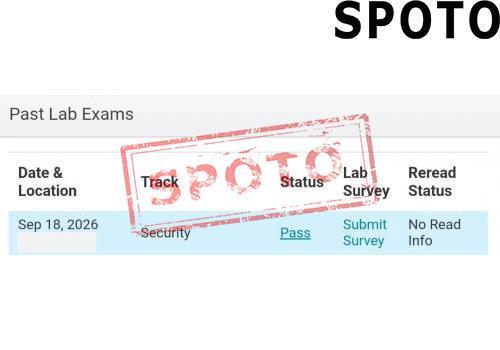
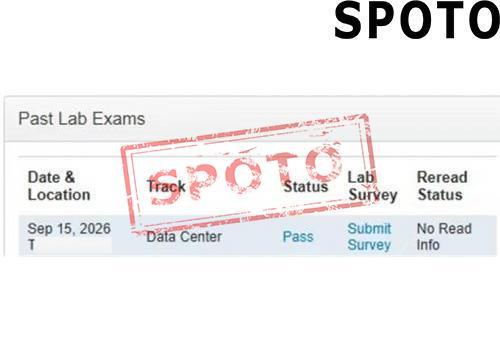
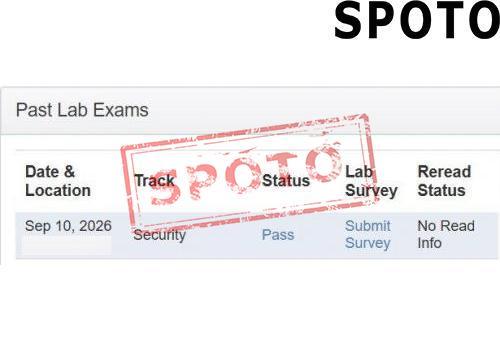
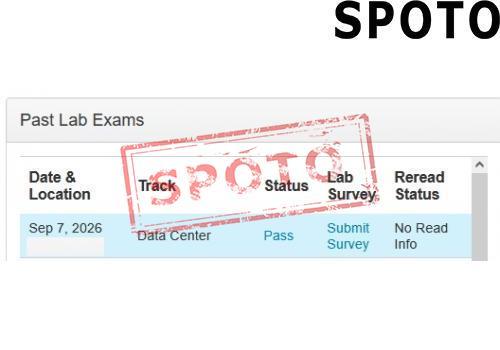
Latest Passing Reports from SPOTO Candidates
DC lab

DC lab

SEC LAB

SEC LAB

EI LAB

EI LAB

EI LAB

EI LAB

DC lab

DC lab

EI LAB

EI LAB

dc lab

dc lab

DClab

DClab

SEC LAB

SEC LAB

DC LAB

DC LAB

Write a Reply or Comment
Home/Blog/Why and how to become a security analyst?
Why and how to become a security analyst?
SPOTO 2025-07-18 14:41:14
Why and how to become a security analyst?

1. What is a Security Analyst?

Security analysts are IT professionals who analyze risk vulnerabilities in company networks and repair and improve possible external threats and emergencies. They play an important role in protecting sensitive organizational information and ensuring the safe operation of the organization. The core of a security analyst's job responsibilities is to maintain the security of an organization's network and important assets. This ranges from controlling file access and credentials, maintaining firewalls and network updates, and actively trying to hack into systems to find vulnerabilities and weaknesses. They must be able to protect the company's digital assets from unauthorized corporate and personal access by continuously monitoring the organization's network, systems, and applications using a variety of security tools and techniques. This includes protecting online and local infrastructure, screening indicators and data to filter suspicious activities, and discovering and reducing risks before data leaks occur. Security analysts also regularly assess the security vulnerabilities of the organization's IT infrastructure. Generate relevant data reports for IT administrators and business managers to evaluate the feasibility of existing security policies. And they must have the ability to work across departments so that they can deal with incidents in a timely and effective manner in the face of sudden major crises. In order to be better qualified for the work of security analysts, employers often require job seekers to have certain professional skills when applying for a job, which can help them to be handy when actually dealing with security issues. First of all, security analysts, like other information technology personnel, need to have network programming experience. Because network security analysts are responsible for protecting digital infrastructure, network security professionals usually need to have certain basic programming experience and be familiar with basic programming languages such as C, C++, PHP, Perl and Java. Secondly, because network security issues will continue to change over time, security analysts also need to be able to have a rigorous work attitude and an enterprising mentality, and continue to learn and improve their basic qualities in their professional fields at work. Finally, due to the continuous development of automation and cloud computing technologies, security analysts must also learn to apply these technologies to ensure the security of the enterprise, such as Python scripts, SOAR tools (such as Phantom, Cortex XSOAR)

2. Analysis of career prospects of security analyst

Organizations across all industries rely on security analysts to protect their sensitive information, financial assets, and reputation. This high demand ensures that security analysts have a steady job market demand and good career advancement prospects. The average annual salary for a Security Analyst in the United States is $107,334. That works out to about $51.60 an hour. That works out to $2,064 per week or $8,944 per month. The average salary range for a Security Analyst varies greatly (as much as $38,500), which means there may be many opportunities for advancement and increased pay based on skill level, location, and years of experience.

3. Why and how to become a security analyst?

Becoming a security analyst is not only a highly technical and challenging career choice, but also a valuable and meaningful job in today's digital age. With the increasing frequency and complexity of cyber attacks, various organizations are in urgent need of professional security talents to protect their critical data and information systems. As a security analyst, you will be at the forefront of information defense, monitoring network threats in real time, analyzing attack behaviors, discovering security vulnerabilities, and formulating effective response strategies, which will not only bring a strong sense of professional achievement, but also continue to hone your technical and logical thinking skills. In addition, the career path of security analysts is clear and has great development space. With the accumulation of experience, they can be promoted to security architects, security operations supervisors, and even CISOs (Chief Information Security Officers); and in terms of salary and benefits, this position has good salary and benefits worldwide, and can achieve considerable growth with the improvement of their own skills and abilities. Becoming a security analyst often requires starting from the following aspects: education level, work experience, professional ability and authoritative certification.Security analysts often need to obtain a bachelor's degree in Cybersecurity (or a closely related field such as Mathematics, Computer Science, or Engineering), but academic qualifications alone are not enough. You need to gain relevant experience in actual combat, which is also valued by employers and can make you stand out in interviews and actual combat.Moreover, in actual work, we must take it seriously and constantly accumulate and improve our professional skills in order to deal with different sudden network security issues.Finally, you can learn to improve your competitiveness in the workplace by taking the path of obtaining authoritative certification.

4. Begin your Security Analyst career with Cisco

CCIE Security (Cisco Certified Internetwork Expert - Security) is a top network security certification launched by Cisco. It is one of the most valuable and recognized technical certifications in the field of network security worldwide. It is aimed at professionals with advanced technical capabilities who can design, deploy, operate and troubleshoot complex network security systems. CCIE Security certification is of great help to those who want to become an excellent security analyst. It can not only significantly improve your technical capabilities, but also make you stand out in the job market.

Latest Passing Reports from SPOTO Candidates
DC lab
SEC LAB
EI LAB
EI LAB
DC lab
EI LAB
dc lab
DClab
SEC LAB
DC LAB
Write a Reply or Comment
Don't Risk Your Certification Exam Success – Take Real Exam Questions
Eligible to sit for Exam? 100% Exam Pass GuaranteeEligible to sit for Exam? 100% Exam Pass Guarantee
SPOTO Ebooks
Recent Posts
Building the AI Factory: Is the NVIDIA NCA-AIIO Your Ticket into the Data Center?
Demystifying the Cloud Blueprint: How to Pass the AWS Solutions Architect Associate (SAA-C03) Exam in 2026
Beyond the Hype: Is the CCNP Still Worth Pursuing in 2026?
Scraping Past the Hype: What It Really Takes to Pass the NVIDIA NCA-GENL Exam
Is the CCNA outdated? The Real Truth About Choosing Your Networking Path in 2026
Details Determine Success or Failure: The Brutal Truth About Passing the NVIDIA NCP-AIN Certification Exam
Privacy by Design Certifications: An Overview of the Modern ISACA CDPSE Certification
Why ISACA CGEIT is the Ultimate Executive Milestone?
Why CRISC is the Smartest Tech Bet in 2026?
The Ultimate Guide to CCIE Data Center Lab Preparation: Pass on the First Attempt
Excellent
5.0
Based on 5236 reviews
Request more information
I would like to receive email communications about product & offerings from SPOTO & its Affiliates.
I understand I can unsubscribe at any time.