Latest Cisco, PMP, AWS, CompTIA, Microsoft Materials on SALE Get Now Get Now
Home/
Blog/
CCIE Automation (v1.1): Core Exam Changes and Advanced Preparation Strategies
SPOTO 2 2026-04-22 11:04:41
CCIE Automation (v1.1): Core Exam Changes and Advanced Preparation Strategies

Effective February 3, 2026, the DevNet Expert certification officially upgrades to CCIE Automation v1.1. This renaming represents not merely a brand consolidation, but a fundamental redefinition by Cisco of the "software engineering capabilities" expected of network engineers.

Although the overall body of knowledge has shifted by less than 10%, the primary focus of the examination has shifted comprehensively—moving away from mere "scripting" toward "automation architecture design and cross-platform integration."


1. Thematic Shift: From "Scripting Artisan" to "System Architect"

While Version 1.1 retains the classic format of the 8-hour lab exam (covering both design and deployment), there has been a significant shift in the focus of the toolchain assessment:

Core Tenet: The exam now incorporates modern IaC (Infrastructure as Code) principles, deprecates obsolete APIs, and places a heightened emphasis on the ability to automate and manage hybrid cloud environments and containerized (K8s) architectures.

Toolchain Restructuring: Terraform has officially replaced Puppet as the core IaC tool; Jinja2 and YAML have become the standard tools for configuration automation; and the depth of integration—specifically the proficiency in utilizing controller APIs such as vManage and DNA Center—is now the critical factor determining one's final score.


2. Key Technology Stack Evolution Checklist

Candidates should prioritize adjusting their knowledge base, focusing specifically on technological iterations within the following domains:

Software Design & Architecture (Core): New additions include Hybrid Cloud Design, K8s Microservices, and Observability Design for Automation Systems; foundational and fragmented scripting tasks have been removed.

Automation & IaC (Core): New additions include YAML/Jinja2 Templating, Terraform, and practical Postman application; IOS XE Native APIs and Puppet have been removed.

Network Security (Core): New additions include API Security Hardening, OWASP Principles, and Key Management within automated environments; emphasis is placed on enhancing "Shift-Left Security" logic within automation workflows.

Operations & Troubleshooting (Core): New additions include AI/ML-driven diagnostic logic and cross-platform (ACI/SD-WAN) coordinated self-healing capabilities, with a focus on strengthening automated anomaly handling capabilities.


3. Practical Exercises: A Three-Phase Exam Preparation Blueprint (12–16 Weeks)

Phase 1: Foundation Building & Environment Alignment (Weeks 1–3)

Task Checklist: Download the v1.1 blueprint; clearly define the scope of "new additions" and "removals" relative to previous versions; and complete the environment alignment process—specifically for designated versions such as IOS XE 17.9 and SD-WAN 20.9—within the DevNet Sandbox.

Key Skills: Rapidly master the fundamentals of HCL (Terraform) and Jinja2 control flow.

Phase 2: Core Proficiency & Platform Integration (Weeks 4–10)

This constitutes the "deep end" of the entire exam preparation process; a project-driven learning approach is highly recommended:

IaC in Action: Write Terraform modules to orchestrate resources across multiple data centers, and utilize Jinja2 to generate device configurations that meet compliance requirements.

In-Depth API Integration Testing: Build a comprehensive Postman collection covering all core endpoints for vManage and DNA Center, with a specific focus on testing the automated conflict resolution capabilities for device configurations.

Multi-Platform Interoperability: Simulate and implement the integration logic wherein "the deployment of an SD-WAN policy automatically triggers a security compliance scan via DNA Center."

Phase 3: High-Pressure Troubleshooting & Architectural Optimization (Weeks 11–16)

Simulated Exam Practice: Conduct a full-cycle, 8-hour simulation session every week. The Design Module (3 hours) requires training in how to rapidly sketch out high-availability solutions; the Deploy Module (5 hours) requires the ability to quickly recover from simulated failures, such as API timeouts and resource conflicts.

Review & Optimization: Create a "Troubleshooting Playbook" to establish rapid-response protocols for high-frequency issues, including API return code errors, configuration drift, and template rendering errors.


4. Core Exam Preparation Philosophy: Beyond Code—It's About Engineering

Reject Rote Memorization: The CCIE Automation exam assesses your problem-solving mindset—specifically, your ability to leverage tools to resolve issues. For instance, when confronted with complex faults, you should be able to utilize Python scripts to automatically retrieve and compare status data across multiple devices, rather than relying on manual verification.

Shift Left Security: When designing any automation solution, it is imperative to prioritize the principle of least privilege for API access and to implement data masking for sensitive information; this is considered a value-added element in v1.1 of the exam.

Version Consistency Principle: Discrepancies between the software versions in the actual exam environment and your preparation environment are a common cause of lab failures. You must ensure that every API method you intend to use has been thoroughly validated against the specific controller version relevant to the exam.

The core of the CCIE Automation v1.1 transformation lies in an "engineering mindset." Throughout your preparation, consistently adhere to the principles that "practical application outweighs theory" and "design takes precedence over code." Once you can proficiently use Terraform to orchestrate multi-cloud environments, employ Jinja2 templates to standardize complex configurations, and leverage APIs to establish closed-loop health monitoring, you will have attained the technical vision expected of a CCIE Automation expert.


Summary: We recommend that you immediately begin setting up a local lab environment. Prioritize the new focus areas introduced in this update—specifically container integration and cloud-edge deployment—as key areas for intensive study. Through deliberate practice, ensure that you can navigate the entire lifecycle—from architectural design to automated delivery—with complete confidence and ease during the actual exam.

With agile responsiveness, SPOTO provides real-time synchronization of authoritative exam syllabus updates, ensuring that our students are the very first to access the latest question banks and in-depth analyses of key exam topics.

We are dedicated to helping you build a robust knowledge foundation—through deep-dive analyses of critical technical concepts and realistic mock exams—enabling you to pass your certification exam on your very first attempt with absolute confidence!
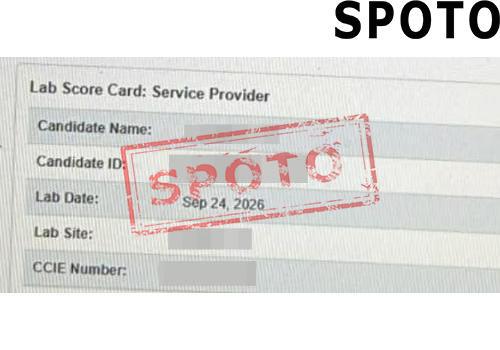
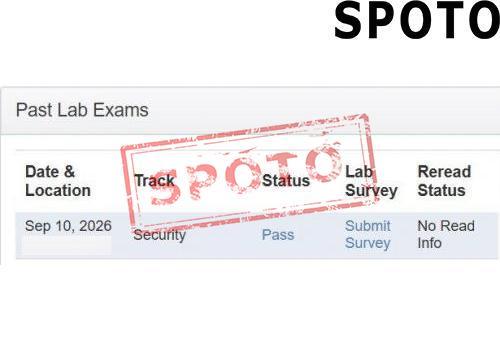
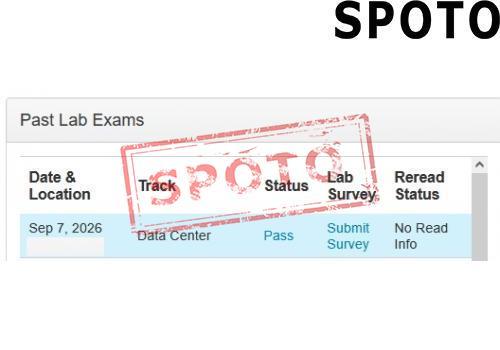
Latest Passing Reports from SPOTO Candidates
EI LAB

EI LAB

EI LAB

EI LAB

DC LAB

DC LAB

sec lab

sec lab

dc lab

dc lab

ccde lab

ccde lab

EI lab

EI lab

DC lab

DC lab

EI Lab

EI Lab

EI Lab

EI Lab

Write a Reply or Comment
Home/Blog/CCIE Automation (v1.1): Core Exam Changes and Advanced Preparation Strategies
CCIE Automation (v1.1): Core Exam Changes and Advanced Preparation Strategies
SPOTO 2 2026-04-22 11:04:41
CCIE Automation (v1.1): Core Exam Changes and Advanced Preparation Strategies

Effective February 3, 2026, the DevNet Expert certification officially upgrades to CCIE Automation v1.1. This renaming represents not merely a brand consolidation, but a fundamental redefinition by Cisco of the "software engineering capabilities" expected of network engineers.

Although the overall body of knowledge has shifted by less than 10%, the primary focus of the examination has shifted comprehensively—moving away from mere "scripting" toward "automation architecture design and cross-platform integration."


1. Thematic Shift: From "Scripting Artisan" to "System Architect"

While Version 1.1 retains the classic format of the 8-hour lab exam (covering both design and deployment), there has been a significant shift in the focus of the toolchain assessment:

Core Tenet: The exam now incorporates modern IaC (Infrastructure as Code) principles, deprecates obsolete APIs, and places a heightened emphasis on the ability to automate and manage hybrid cloud environments and containerized (K8s) architectures.

Toolchain Restructuring: Terraform has officially replaced Puppet as the core IaC tool; Jinja2 and YAML have become the standard tools for configuration automation; and the depth of integration—specifically the proficiency in utilizing controller APIs such as vManage and DNA Center—is now the critical factor determining one's final score.


2. Key Technology Stack Evolution Checklist

Candidates should prioritize adjusting their knowledge base, focusing specifically on technological iterations within the following domains:

Software Design & Architecture (Core): New additions include Hybrid Cloud Design, K8s Microservices, and Observability Design for Automation Systems; foundational and fragmented scripting tasks have been removed.

Automation & IaC (Core): New additions include YAML/Jinja2 Templating, Terraform, and practical Postman application; IOS XE Native APIs and Puppet have been removed.

Network Security (Core): New additions include API Security Hardening, OWASP Principles, and Key Management within automated environments; emphasis is placed on enhancing "Shift-Left Security" logic within automation workflows.

Operations & Troubleshooting (Core): New additions include AI/ML-driven diagnostic logic and cross-platform (ACI/SD-WAN) coordinated self-healing capabilities, with a focus on strengthening automated anomaly handling capabilities.


3. Practical Exercises: A Three-Phase Exam Preparation Blueprint (12–16 Weeks)

Phase 1: Foundation Building & Environment Alignment (Weeks 1–3)

Task Checklist: Download the v1.1 blueprint; clearly define the scope of "new additions" and "removals" relative to previous versions; and complete the environment alignment process—specifically for designated versions such as IOS XE 17.9 and SD-WAN 20.9—within the DevNet Sandbox.

Key Skills: Rapidly master the fundamentals of HCL (Terraform) and Jinja2 control flow.

Phase 2: Core Proficiency & Platform Integration (Weeks 4–10)

This constitutes the "deep end" of the entire exam preparation process; a project-driven learning approach is highly recommended:

IaC in Action: Write Terraform modules to orchestrate resources across multiple data centers, and utilize Jinja2 to generate device configurations that meet compliance requirements.

In-Depth API Integration Testing: Build a comprehensive Postman collection covering all core endpoints for vManage and DNA Center, with a specific focus on testing the automated conflict resolution capabilities for device configurations.

Multi-Platform Interoperability: Simulate and implement the integration logic wherein "the deployment of an SD-WAN policy automatically triggers a security compliance scan via DNA Center."

Phase 3: High-Pressure Troubleshooting & Architectural Optimization (Weeks 11–16)

Simulated Exam Practice: Conduct a full-cycle, 8-hour simulation session every week. The Design Module (3 hours) requires training in how to rapidly sketch out high-availability solutions; the Deploy Module (5 hours) requires the ability to quickly recover from simulated failures, such as API timeouts and resource conflicts.

Review & Optimization: Create a "Troubleshooting Playbook" to establish rapid-response protocols for high-frequency issues, including API return code errors, configuration drift, and template rendering errors.


4. Core Exam Preparation Philosophy: Beyond Code—It's About Engineering

Reject Rote Memorization: The CCIE Automation exam assesses your problem-solving mindset—specifically, your ability to leverage tools to resolve issues. For instance, when confronted with complex faults, you should be able to utilize Python scripts to automatically retrieve and compare status data across multiple devices, rather than relying on manual verification.

Shift Left Security: When designing any automation solution, it is imperative to prioritize the principle of least privilege for API access and to implement data masking for sensitive information; this is considered a value-added element in v1.1 of the exam.

Version Consistency Principle: Discrepancies between the software versions in the actual exam environment and your preparation environment are a common cause of lab failures. You must ensure that every API method you intend to use has been thoroughly validated against the specific controller version relevant to the exam.

The core of the CCIE Automation v1.1 transformation lies in an "engineering mindset." Throughout your preparation, consistently adhere to the principles that "practical application outweighs theory" and "design takes precedence over code." Once you can proficiently use Terraform to orchestrate multi-cloud environments, employ Jinja2 templates to standardize complex configurations, and leverage APIs to establish closed-loop health monitoring, you will have attained the technical vision expected of a CCIE Automation expert.


Summary: We recommend that you immediately begin setting up a local lab environment. Prioritize the new focus areas introduced in this update—specifically container integration and cloud-edge deployment—as key areas for intensive study. Through deliberate practice, ensure that you can navigate the entire lifecycle—from architectural design to automated delivery—with complete confidence and ease during the actual exam.

With agile responsiveness, SPOTO provides real-time synchronization of authoritative exam syllabus updates, ensuring that our students are the very first to access the latest question banks and in-depth analyses of key exam topics.

We are dedicated to helping you build a robust knowledge foundation—through deep-dive analyses of critical technical concepts and realistic mock exams—enabling you to pass your certification exam on your very first attempt with absolute confidence!
Latest Passing Reports from SPOTO Candidates
EI LAB
EI LAB
DC LAB
sec lab
dc lab
ccde lab
EI lab
DC lab
EI Lab
EI Lab
Write a Reply or Comment
Don't Risk Your Certification Exam Success – Take Real Exam Questions
Eligible to sit for Exam? 100% Exam Pass GuaranteeEligible to sit for Exam? 100% Exam Pass Guarantee
SPOTO Ebooks
Recent Posts
2026 Latest CCIE Automation v1.1 Exam Preparation Guide
CCIE Enterprise Infrastructure (EI v1.1) In-Depth Preparation Guide: From Protocol Expertise to Architectural Engineering
CCIE Automation (v1.1): Core Exam Changes and Advanced Preparation Strategies
CCIE Automation: An In-Depth Preparation Strategy for the New 2026 Certification Framework
CCIE Data Center (v3.1) Lab Exam In-Depth Analysis: Technical Evolution and Comprehensive Preparation Guide
CCIE EI LAB Exam: Latest Question Changes and Exam Impact Analysis
CCIE Automation Certification: Latest Question Changes and Exam Impact Analysis
CCIE DC LAB (v3.1) Exam: Latest Question Changes and Exam Impact Analysis
2026 Microsoft AZ-104 Exam Update: What You Need to Prepare?
2026 CCNA Exam Update: The Latest Changes You Need to Know
Excellent
5.0
Based on 5236 reviews
Request more information
I would like to receive email communications about product & offerings from SPOTO & its Affiliates.
I understand I can unsubscribe at any time.